

Digest of the day
November 20, 2026
10 stories
Philips Sonicare cut customer CPA 75% after consolidating streaming TV buying through Amazon Ads Agent, while Nielsen will shrink its audio ad impression threshold to one minute, lifting inventory 20% starting April 2027. WARC projects social ad spend hitting $394.6bn in 2026 as P&G's Marc Pritchard pushes brands toward a "post-social era," and Attain positions itself as the data partner for The Trade Desk's new Open Measurement initiative.

Médiamétrie executives say synthetic data needs independent audits
Aurélie Vanheuverzwyn, Médiamétrie's executive vice-president of data and methodology, and Frederic Vaulpre, senior vice-president of Médiamétrie's Glance, wrote in The Media Leader that synthetic data is already important to audience measurement but needs independent validation before trading currencies rely on it. They point to three genuine uses: filling in data for rare populations, protecting privacy under European regulation, and testing concepts in a sandbox before costly fieldwork. They also flag three risks: synthetic data inherits every bias in its source data, produces less variation than real respondents, and struggles to predict genuine market change because models train on the past. The authors argue joint industry committees and measurement providers should act as independent auditors, setting validation standards and defining acceptable levels of statistical error. Their conclusion: audience measurement's future blends real data, panels, surveys, census data and synthetic modelling together to preserve transparency and accountability.
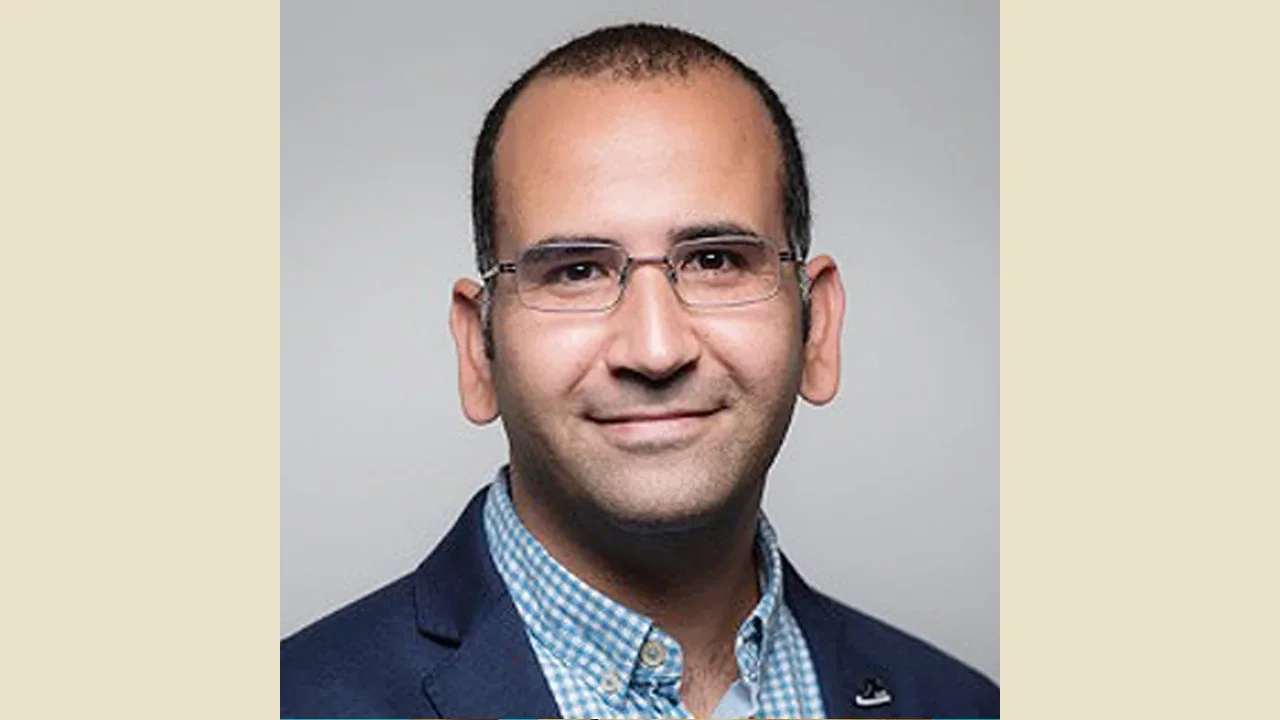
AdExchanger: judging ChatGPT ads by Google Search metrics misreads their value
An AdExchanger opinion column argues that marketers are measuring ChatGPT advertising with the wrong yardstick. The piece compares OpenAI's conversational ads against Google Search on cost-per-acquisition and conversion rate, then argues the comparison breaks down. Google captures intent that already exists: a search for "cheap hotels in Hawaii" signals a near-complete purchase decision. A ChatGPT conversation builds that intent over several minutes of back-and-forth, so CPA at the point of conversion can look higher even when the resulting customer is better qualified. Last-click attribution credits whichever channel sits closest to the sale, so an earlier AI conversation that shaped the decision often gets no credit at all. The column calls for incrementality measurement in place of CPA comparisons, the same shift advertisers made for social and retail media. Without that shift, the piece warns, marketers risk underestimating a channel that monetizes the conversation behind a purchase. Google's advertising model monetizes the keyword that captures intent after it has already formed.

Viamedia.ai exec: streaming ad shift needs new demand and addressability
Viamedia.ai president and chief strategy officer Evan Rutchik argues that the TV industry's shift from linear to streaming carries a financial problem. At Disney, Paramount and Warner Bros. Discovery, linear ad revenue is falling faster than streaming ad revenue is rising. Streaming inventory is growing through higher volume, and prices stay flat as free ad-supported tiers expand across major subscription platforms. Rutchik points to local and midmarket advertisers, who collectively spend billions of dollars a year on linear TV and have stayed out of national CTV campaigns because of cost. He calls this group an untapped source of demand that could balance the market. His second fix is household addressability, now common on some streaming platforms and largely missing from the broader TV market, including linear. Targeted, addressable impressions carry more value for advertisers than undifferentiated inventory sold in bulk, he writes, and that value supports higher CPMs.
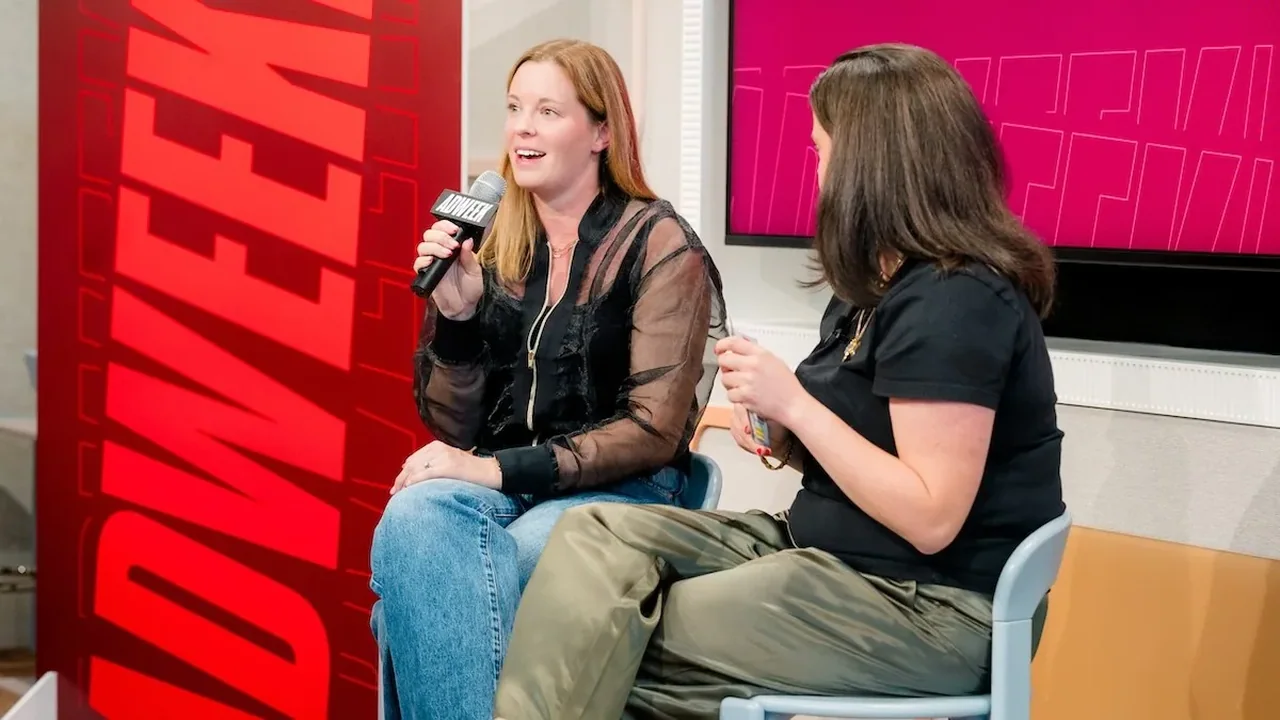
Incubeta's Amy Crowther details AI-recommendation playbook at ADWEEK summit
During a fireside chat at the ADWEEK House Commerce Summit, Amy Crowther, CEO Americas at Incubeta, laid out ways brands can earn recommendations from AI agents such as ChatGPT and Gemini. Crowther told ADWEEK's Lauren Johnson that brands need consistent language across every digital touchpoint, from websites to FAQ pages, because large language models absorb everything a brand publishes. She named YouTube as the main source feeding generative AI engines, ahead of Instagram and Pinterest. Crowther described a test Incubeta ran for a travel luggage brand: creative lost focus on the product whenever a human face appeared, a pattern that tracked a two-year downward trend across that brand's media campaigns. Crowther urged marketers to replace single pre-launch plans with continuous iteration once a campaign goes live, connecting media, creative and data to drive incrementality.
OpenAI launches ChatGPT Business Hub, giving publishers first-party AI visibility data
OpenAI launched a ChatGPT Business Hub last week, a dashboard that lets verified brands and publishers track mentions, profile views, website clicks and the topics driving discovery inside ChatGPT. NewzDash CEO John Shehata called it "a very early, very limited Search Console moment for ChatGPT." Of six large publishers Digiday spoke with, half had already started setting up accounts. The data stays aggregated, with no prompts, no per-article breakdown and no competitor benchmarks. OpenAI's terms also require businesses to waive certain legal claims tied to content published before signup, a condition one publishing executive said legal teams will want to review closely. Some publishers plan to use the first-party click and mention data to support their GEO offerings, pairing it with existing third-party AI visibility tools to show brand clients how their campaigns perform.
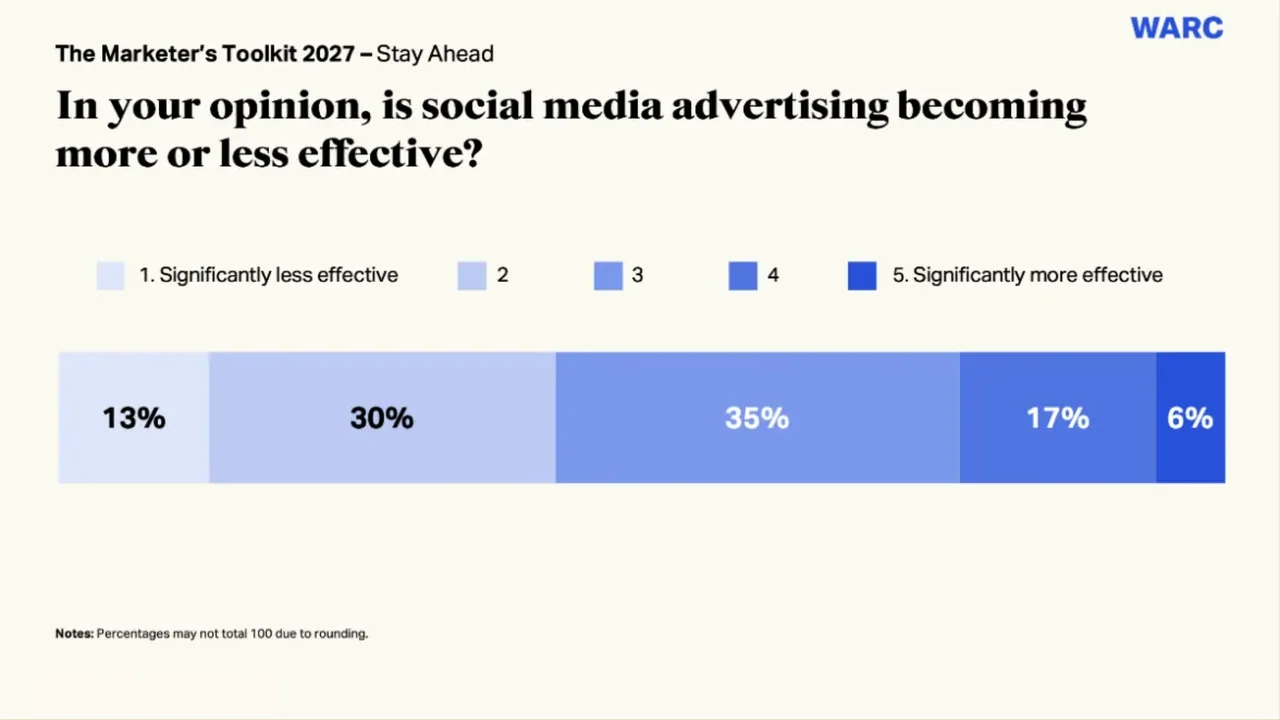
WARC: marketing enters 'post-social era', social ad spend set to hit $394.6bn in 2026
Procter & Gamble marketing chief Marc Pritchard tells WARC that brands now need to "leave a trace in the algorithm," publishing more content, in more formats, more often. WARC's new report calls this the post-social era: content distribution runs on algorithmic recommendation more than on networks of friends and followers. Ad budgets move the other way. WARC forecasts global social media ad spend will grow 21.3% in 2026 to $394.6 billion, the fastest rate of any channel. Short-form video splits opinion: 83% of marketers say it is popular with consumers, while 40% doubt it builds brand value the way television and film do. On AI, 42% of marketers expect it to improve marketing effectiveness and 19% expect a negative effect. Just 46% of marketers expect business conditions to improve in 2027, down close to 20 points from three years ago.

Attain names itself foundational data partner in The Trade Desk's Open Measurement
Attain co-founder and CEO Brian Mandelbaum lays out The Trade Desk's upcoming Open Measurement initiative in an opinion piece on The Current, and names Attain as its foundational data partner. Attain will supply real-time verified consumer transaction data as an input to the methodology. Mandelbaum writes that Open Measurement accounts for the quality of different ad exposures, which he says can recognize value in media environments that conventional attribution has struggled to evaluate. He argues that measurement only has worth when it changes the next decision: "Knowing what a campaign accomplished only matters if it makes the next decision better." The piece argues that purchase data should inform campaigns before launch, during optimization and in post-campaign measurement, using consistent data across all three stages. Open Measurement is not yet available, per a disclosure accompanying the article.

Case Philips Sonicare cuts customer CPA 75% by buying streaming TV via Amazon Ads Agent
Philips Sonicare consolidated its streaming TV ad buying into one platform during the 2025-26 upfront season, using Amazon Ads Agent to purchase inventory across Paramount+, Roku, Tubi, Peacock, TelevisaUnivision and Warner Bros. Discovery. The oral care brand had negotiated with each streaming publisher separately before this shift. Amazon found that 86% of the oral care audience segment had yet to consider Philips products, so the brand combined Amazon's shopper data with its own first-party data to build custom audience segments targeting in-market buyers new to the brand. The consolidated buy produced 24% incremental reach among likely-interested audiences and cut customer cost per acquisition by 75%. Consumers who saw the brand's streaming ads purchased at a rate 15 times higher than those who saw only its Sponsored Ads placements on Amazon's site, a sign that streaming TV drove both awareness and measurable purchase intent.

Nielsen Cuts Audio Ad Impression Threshold to One Minute, Lifting Inventory 20%
Nielsen will lower the measurable ad impression threshold in its PPM audio currency from three minutes to one minute, effective with the April 2027 survey period. The change follows a cut from five minutes to three minutes in January 2025, meaning the audio currency has shifted twice in under two years. Nielsen expects the new threshold to expand measurable ad impressions in the audio market by about 20%, giving audio sellers more inventory to sell. Advertisers and agencies will find audio audience data harder to compare against historical plans, buys and posts built on the old three-minute standard. Nielsen Audio Managing Director Rich Tunkel said adopting a one-minute qualifier "strengthens data for everyone." The shift also matches the one-minute threshold Nielsen adopted for local TV earlier in 2026, putting TV and audio on the same measurement basis for cross-platform campaign evaluation.
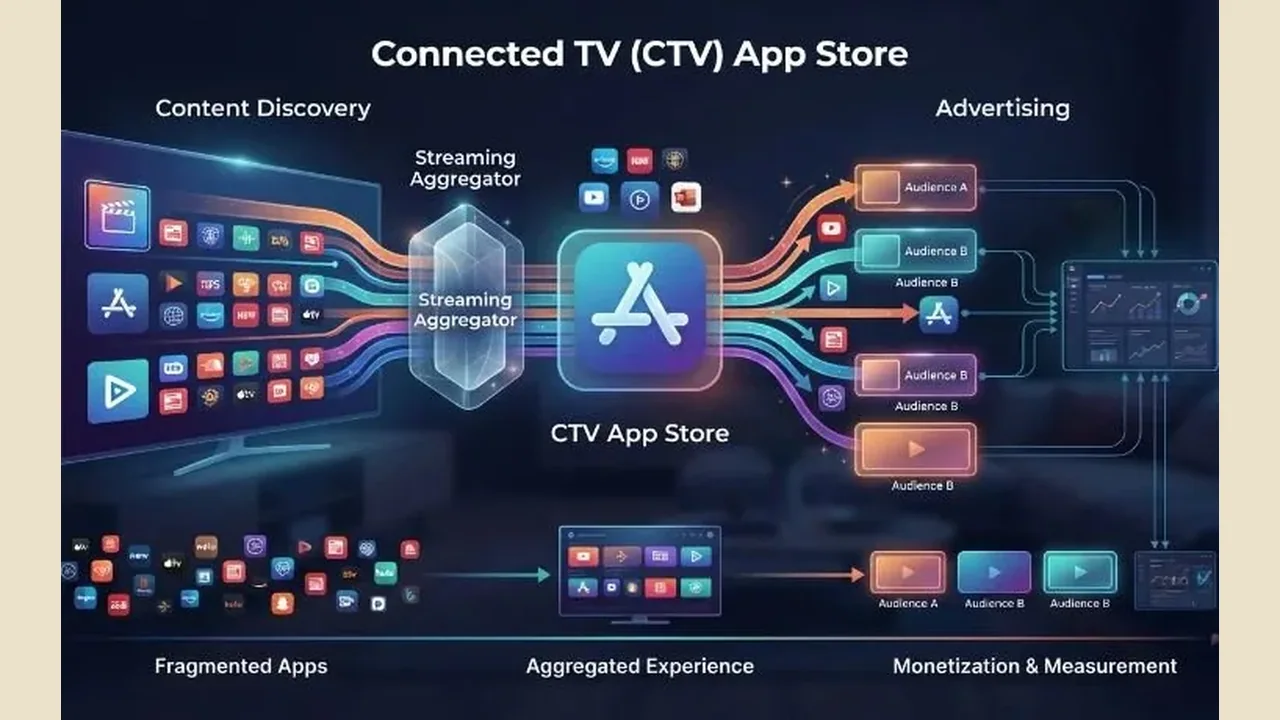
Roku and Amazon Fire TV Turn CTV Home Screens Into Ad-Supported Discovery Layers
Streaming aggregators are consolidating app libraries, search and personalised recommendations into a single CTV interface, and Agency Reporter traces how Roku, Amazon Fire TV, Google TV and Apple TV have each built ecosystems around that shift, with advertising support varying by platform. Roku's platform business spans its operating system, content distribution and advertising capabilities, and Amazon Fire TV combines applications, content discovery and advertising inventory within its television environment. Google TV focuses on pulling recommendations from multiple streaming services into a single interface, while Apple TV offers a connected entertainment environment through its devices and services. Formats under discussion include featured content placements, category sponsorships and promoted titles, placed at the point where a viewer chooses what to watch, ahead of the program itself. Data sharing with external advertisers and measurement partners differs by platform.