

Digest of the day
November 23, 2026
7 stories
LinkedIn is pushing into Connected TV in the UK via LG, Paramount+ and Titan OS, while Comcast's Universal Ads cites SearchKings' 47% CPL cut to push API-first TV buying. The Trade Desk's Q3 revenue dipped to $736 million even as retention held above 95%, and Baymard finds 70% of online carts still go unbought.
Akamai launches AI Brand Presence after 364% gain in its own AI visibility
Akamai introduced AI Brand Presence on May 19, 2026, a tool that automatically translates website content for large language models and AI agents while tracking bot traffic and securing sites at the edge. Akamai piloted the product on its own global website first: citations rose 85%, brand presence in general searches that never named Akamai jumped 364%, and presence within ChatGPT specifically climbed 133% against competitors. The launch responds to a shift Akamai has tracked internally, AI bot traffic up more than 300% year over year, alongside third-party research showing nearly 60% of searches now end without a click. A single dashboard shows which AI models visit a site, what content they consume, and how those visits convert into traffic. Availability starts as a phased, limited rollout to select customers in North America.
LinkedIn launches CTV ads in the UK across LG, Paramount+ and Titan OS
LinkedIn is rolling out Connected TV advertising in the UK, giving B2B marketers access to premium streaming inventory on LG, Paramount+ and Titan OS. Campaigns run through LinkedIn Campaign Manager, matching existing audience targeting to viewers watching ad-supported streaming content on connected TV devices. LinkedIn points to early results from Cisco, which reached 52 percent more midmarket accounts in the UK and saw a 141 percent rise in Lead Gen Form completions among people exposed to the CTV ads. The company also reports that audiences who first encountered a brand through CTV cost 30 percent less to convert into sales leads, and that its CTV ads are 2.6 times more effective at building B2B brand awareness than other CTV options. Cisco's Logan Carter said the platform's professional targeting and account-based marketing capability are why the company invests heavily in LinkedIn.
WARC's Multiplier Playbook combines Analytic Partners, BERA.ai, Prophet and System1
WARC has published the Multiplier Playbook, a resource built with Analytic Partners, BERA.ai, Prophet and System1 to help CMOs integrate brand and performance advertising. The playbook brings together advice, insights and data from each of the five contributors into one document. It adds to WARC's existing effectiveness toolkit, which includes a database of marketing case studies, interactive dashboards tracking four decades of international spend, cost and consumption trends, and rolling forecasts across 100 markets. WARC clients such as McCann Worldgroup Philippines, Kenvue, L'Oréal and Nationwide News Australia are named users of these resources in testimonials WARC has published, citing them for campaign strategy, benchmarking and internal research.
Universal Ads GM calls for API-first TV buying after Action Roofing cuts CPL 47%
James Borow, general manager of Comcast's Universal Ads, argues that TV ad buying still runs on a 2002 playbook while the content on traditional and streaming TV has never been stronger. He points to SearchKings, which built TV into its search platform through the Universal Ads API, letting small-business clients run TV and search together. One client, Florida roofer Action Roofing, saw cost per lead fall 47% and branded search grow 125% year over year within four months of launching TV. Borow also cites a geo-lift test from Neuro Gum & Mints and WorkMagic, which found 63% of incremental sales occurred on TikTok Shop and Amazon, outside the brand's own website. Counting those sales lowered the brand's measured CPA by 68%. Sewing Down South reached an estimated 2.8 million households using an existing social ad with a text overlay for its first TV campaign.
The Trade Desk's Q3 revenue falls to $736 million as streaming fragments ad buying
Customer retention at The Trade Desk stayed above 95% even as third-quarter revenue slipped to $736 million on November 9, down from $739 million a year earlier, though the figure still beat the company's guidance of at least $650 million. The IAB raised its 2026 US ad spend growth forecast to 12.3% in September, with connected TV spend projected to climb 15.6% and linear TV spend projected to fall 1.5%. Media owners are building their own sales and measurement tools: Amazon links campaigns to purchasing data through Amazon DSP and Amazon Marketing Cloud, and Netflix expanded its data-sharing integration with The Trade Desk's Kokai platform in November. The Trade Desk is countering with new products, including Audience Unlimited and an Open Measurement tool due by the end of 2026, arguing that independent platforms judge campaign performance more fairly than the media owners selling the inventory.

EBU report urges PSM newsrooms to close gap with younger audiences
The European Broadcasting Union commissioned a report naming four pressures on public service newsrooms: hyper-partisanship, disengagement among younger audiences, platform algorithms that reward emotion over accuracy, and bad actors moving faster than newsroom defenses. The report, Reaching Everyone: Public Service News and its Unfinished Mission in a Disrupted World, draws on interviews with 19 news leaders and experts, a survey of newsrooms across 29 organisations, and 14 case studies from Europe and beyond. Interviewees include EBU President Delphine Ernotte Cunci, BBC News Global Director Jonathan Munro, Nobel Peace Prize laureate and Rappler CEO Maria Ressa, former Reuters Institute director Rasmus Kleis Nielsen, and polarization expert Bart Brandsma. It recommends deeper audience listening, more transparency about journalism's methods, partnerships with trusted creators, and cross-border cooperation against sabotage and disinformation. EBU Director General Noel Curran said public broadcasters remain 'the biggest producers of content in Europe and the most trusted source of news.'
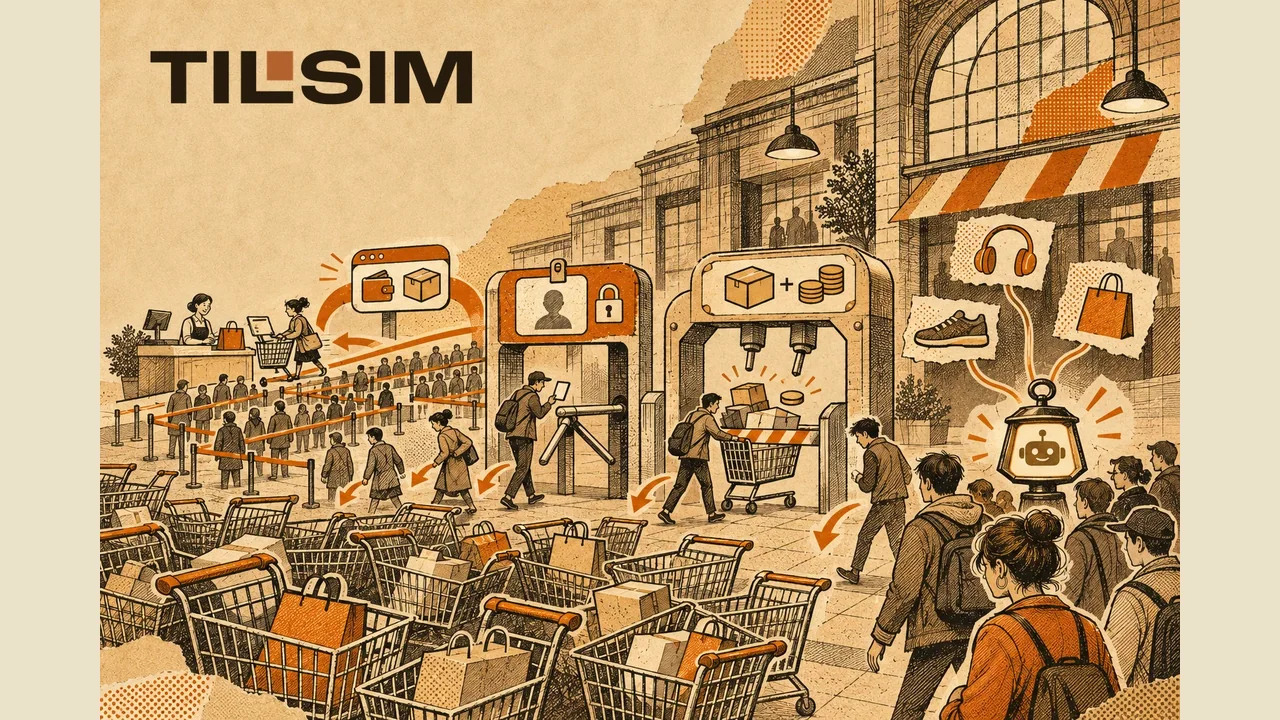
AI-referred store traffic grew 8-fold as 70% of online carts go unbought
Baymard Institute's 2026 data shows that 70.22% of online shopping carts never convert into completed orders. The top reason is cost: 40% of shoppers abandon a cart over added charges like shipping and taxes, while 18% quit when a store demands account creation and 17% leave over a long checkout process. Yandex Pay reports that conversion doubles when a browser already holds saved delivery and payment data. Ashmanov & Partners analytics head Anton Trishin and Data Insight founder Fedor Virin describe a parallel shift: shoppers increasingly ask AI assistants to compare products before they ever reach a checkout page. Shopify recorded more than an 8-fold year-on-year rise in store traffic from AI services in the first quarter of 2026, with AI-search orders up nearly 13-fold. Traffic from Alisa AI to Russian marketplaces and online stores grew 4.6 times since the start of the year. Contentsquare found that only 3% of shoppers complete an order when an AI-recommended site disappoints them.