

TopTraffic's AI ad-buying agents cut CPI 32% and lifted app installs 35% for O'STIN
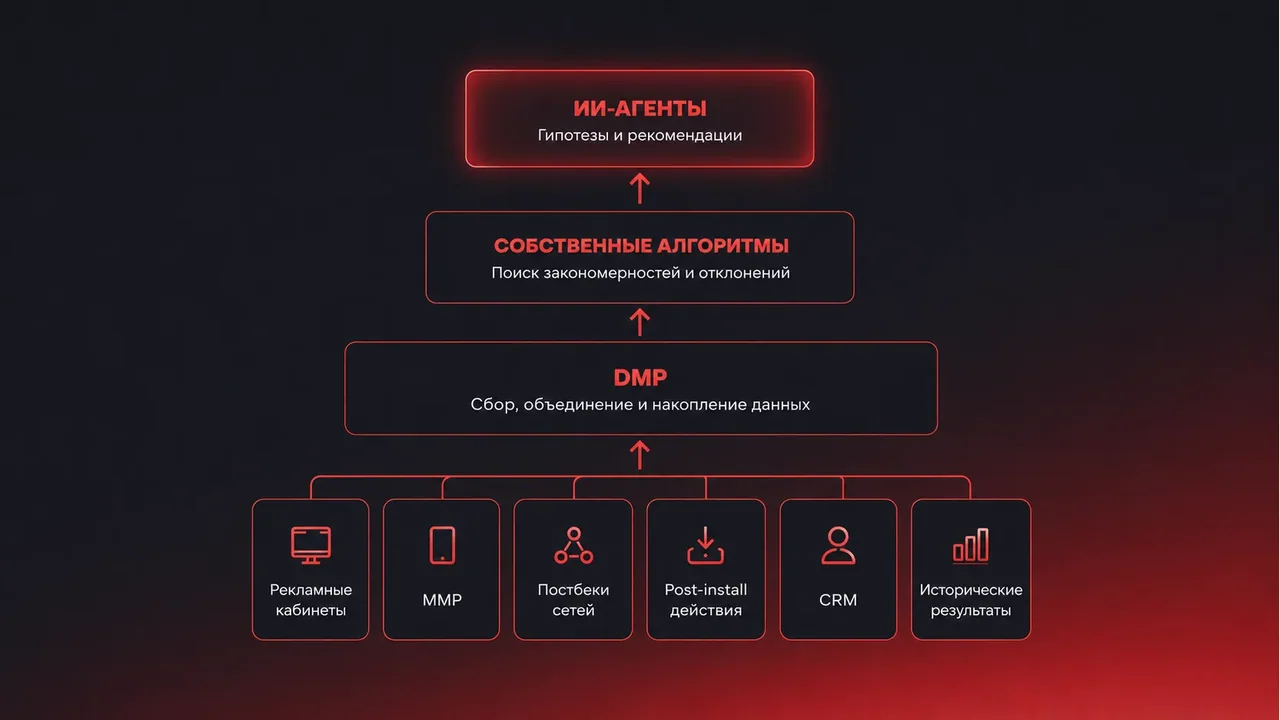
Mobile performance agency TopTraffic co-founder Sasha Danilov described how a cascade of AI agents ran a campaign for apparel brand O'STIN, built to test a high volume of creative and targeting hypotheses without driving up acquisition costs. One agent analyzed the target audience and competitor campaigns, another mined TopTraffic's historical campaign data for patterns, and a third generated hypotheses on creatives, sources and targeting for a human buyer to review and approve before launch. A monitoring agent then tracked results after launch and flagged deviations in Telegram, recommending budget increases, creative checks or a pause depending on how far results drifted from target KPIs. App installs rose 35%, purchase conversion rose 17%, and cost per install on the tested hypotheses fell 32%, while testing costs dropped because weak variants were identified and dropped earlier.
Walled-garden algorithms from Google, Meta and AppLovin already get this kind of automation built in, learning from billions of impressions those platforms control. Agencies without comparable scale need their own data pipeline before an AI agent can make dependable calls on budgets and bids, covering campaign history, MMP postbacks, CRM records and in-app behavior. Skipping that step leaves agents issuing recommendations without enough context to catch fraud patterns or flag a failing creative early. Final sign-off still stays with a human buyer in Danilov's model, which keeps accountability intact while cutting time spent on manual monitoring and hypothesis testing.
- AI agents take over ad buying execution, shifting edge to signal quality
- Apostrophe, Olyzon and others pitch 'unified media platforms' to coordinate ad buying
- Samba launches combined streaming and linear TV audience measurement tool
- Kitsch's 16% geo-lift test backs Snap's Clicks + Deterministic Views measurement