

IAB framework cites study: AI ad labels cut clickthroughs by 31.5%
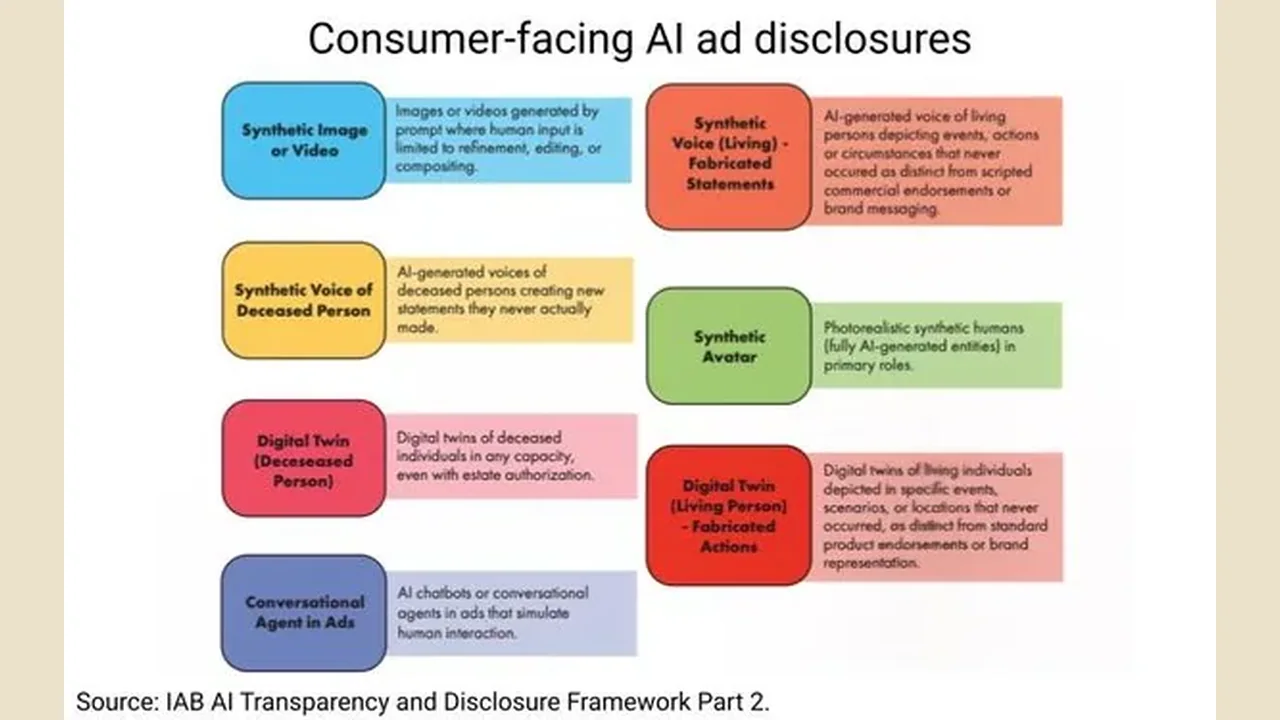
The Interactive Advertising Bureau released the second version of its AI Transparency and Disclosure Framework this week, building on data from Sonata Insights, the research firm founded by Debra Aho Williamson. The framework points to a New York University study that found labeling an ad as AI-made cut its click-through rate by 31.5%. IAB Vice President-AI Caroline Giegerich said, "Trust is everything between a brand and its customers, and being honest about AI is part of earning it." The update recommends three thresholds to determine when content requires a disclosure label, and it warns that overusing labels can create fatigue among consumers, weakening their effect over time. In the U.S., advertisers can choose between a standardized sparkle icon and a clear text label; in the European Union, Article 50, in effect since Aug. 2, 2026, requires disclosure of AI-generated content and deepfakes without mandating a specific icon.
Clickthrough rates falling by nearly a third whenever an AI label appears puts advertisers in a bind: skip the disclosure and risk a deception complaint, apply it to every asset and watch performance drop across a campaign. Sonata Insights found that reactions to AI in creative work split by context, with some consumers responding well and others reading it as synthetic and inauthentic, so a single blanket labeling rule flattens distinctions that matter to media planning. The framework leaves final authority with state and international regulators, so agencies running campaigns in the EU still have to meet Article 50's disclosure rules regardless of what the IAB baseline recommends.
- Russia's CTV ad market seen at 40-50bn rubles in 2026 as adoption triples to 25%
- Google AI Max adds budget and ROI A/B testing across Search campaigns
- AI to influence up to 80% of large Indian brands' digital ad spend by FY27
- iHeartMedia outlines separate measurement frameworks for local vs. national audio ads