

E-Promo model shows DIY app's real install cost 25% higher than attribution reports
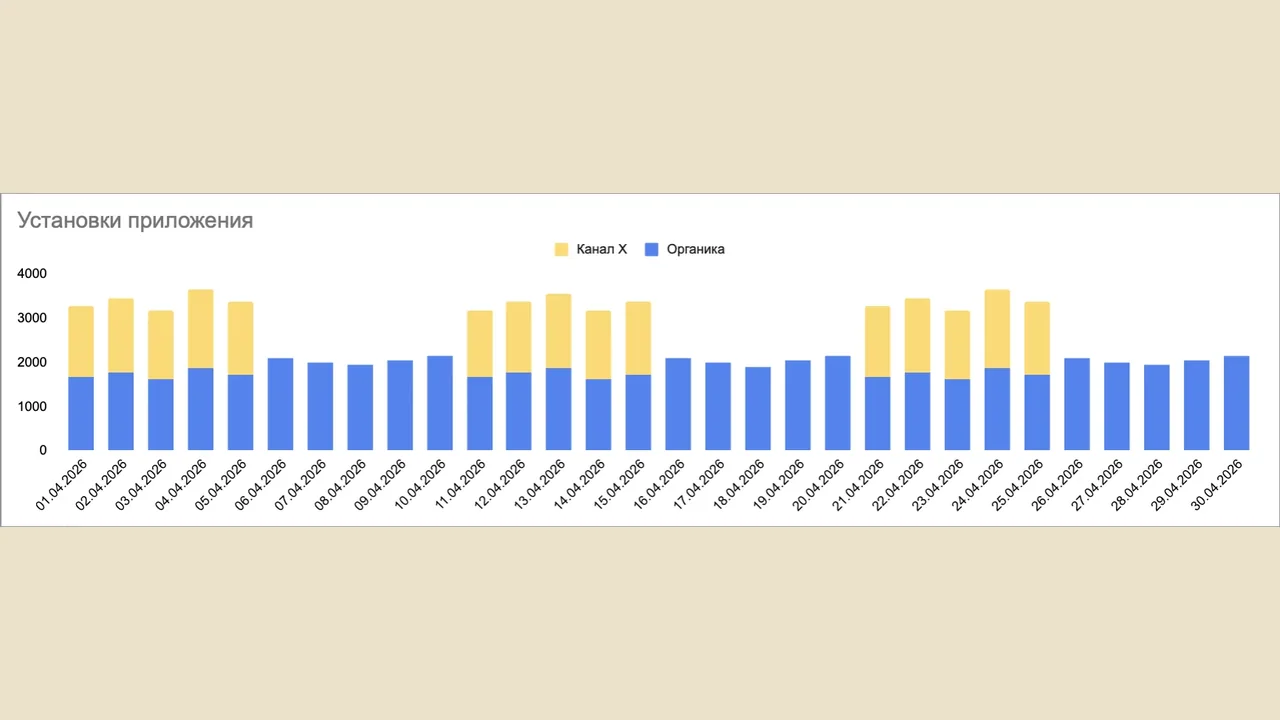
A modeled scenario published by EMP's Svyatoslav Rumakov and E-Promo Group's Alexey Tkachuk walks through an incrementality test for a mobile app in the DIY category, with the numbers altered so no client is identifiable. The example channel spent about 3 million rubles a month and reported 1,640 installs a day at a CPI of 120 rubles. Turning the channel off three times, for five days each time, cut total installs from 3,360 to 2,047 a day, which puts the channel's own contribution at 1,313 installs and its real CPI near 150 rubles, 25% above what the tracker showed. The model's proposed response trims the daily budget from 197,000 to 155,000 rubles and reallocates the 1.2 million rubles a month that frees up, projected to lift blended ROMI by 18%.
Budgets built on attribution alone can fund installs that would have happened anyway, and the gap only shows up once a channel gets switched off. Agencies running UA campaigns face the same risk across search, social and OEM sources, since a channel's reported ROAS can mask cannibalized organic demand. The authors flag conflicts of interest when in-house teams grade their own channels against KPIs tied to volume and CPI, and note that DSP environments rarely support clean A/B splits, since geotargeting usually stops at country level. Running the same channel-off test on a quarterly schedule, and tracking incremental ROAS alongside standard ROAS, gives buyers a rebalancing tool grounded in tested contribution figures.
- Trade Desk's Koa AI agent now plans and optimizes programmatic buys via chat
- Compare the Market CTV test lifts brand favourability 8pts, usage intent 7pts
- Nexxen launches standardised spec for Smart TV home screen ad buying across OEMs
- Ipsos iris drops under-18s: News Corp reaches 16.7m, Domain reaches 7.4m in July