

Viant ties CTV ad pricing to real-time attention data from TVision, Iris TV
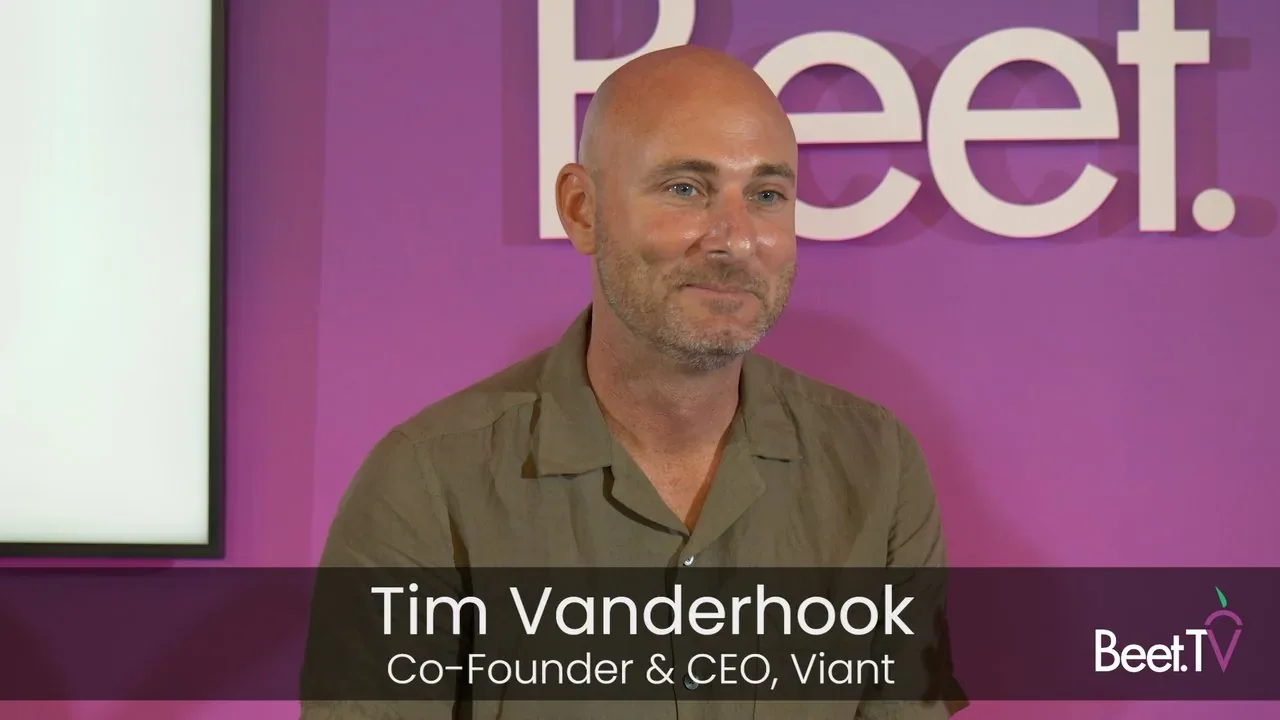
'If an impression gets served in a room where nobody is, it's not an impression, it's an invoice,' Viant CEO Tim Vanderhook said on a Cannes Lions panel with Beet.TV's Pooja Midha. Viant's TVision camera-based panel, which the company acquired, measures presence in the room, co-viewing, household composition and eye-tracking attention down to individual ad pods and slots, feeding that data directly into Viant's demand-side platform to reset CPMs. Vanderhook used two examples to explain what he calls an attention-adjusted CPM: content on Peacock that holds 80% attention justifies its $35 CPM, while a fast channel averaging 40% attention gets normalized to a comparable, lower rate. He also cited the Knicks' recent playoff run, where leads of 50 points pushed presence-in-room up while attention fell as viewers turned to their phones.
Campaigns priced on delivered impressions alone can end up paying full CPMs for inventory nobody actually watches. Viant's attention-adjusted pricing ties cost to eyes-on-screen engagement, using TVision's in-room and eye-tracking data to reset rates at the pod and slot level. The Iris TV content classification lets Viant's DSP target bids inside the specific pods where attention runs highest, making engagement level a factor in what counts as premium inventory. Viant also opened a publisher-facing portal that shows sellers household ID rates, Iris contextual data and, soon, TVision attention scores inside its DSP, and Vanderhook pointed to Viant's percentage-of-spend fee model as the basis for trusting its attention grades over walled-garden competitors that also own content.