

Yandex Metrica adds four new reports for retention and lifetime value
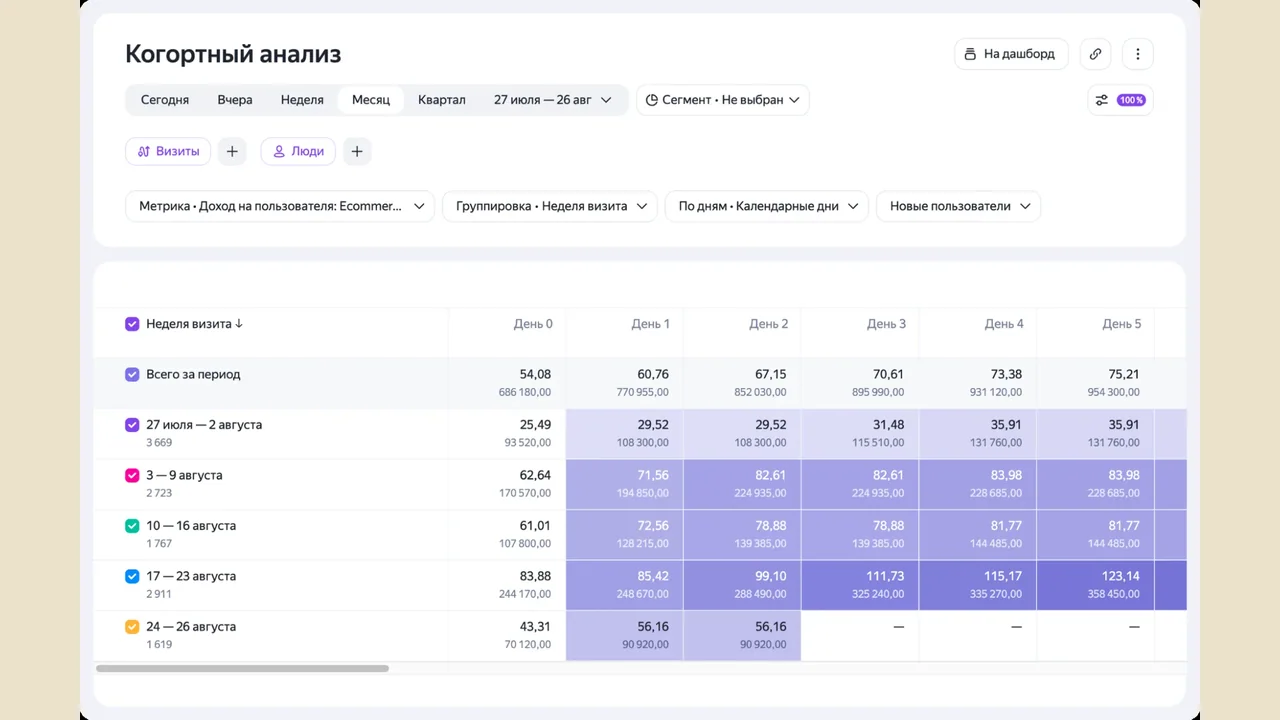
Four new reports have appeared in Yandex Metrica focused on user retention and long-term value, according to Yandex Reklama's press service, which described the update to ppc.world. The first report tracks how visits, conversions and revenue build up over time for users who arrived in the same period, useful for comparing traffic sources and campaigns over long stretches. The second measures what share of users return within a chosen period after a visit, a way to spot when return rates begin to fall and time reactivation campaigns; Yandex says this is especially relevant for media, marketplaces and subscription services with recurring visits. The third report counts users who returned within a period or at least once after it, designed for businesses with long decision cycles such as real estate, cars or major home appliances. The fourth compares retention across cohorts before and after changes to a site, onboarding flow or campaign. All four reports are already live in the Metrica interface, and Yandex has published a separate article detailing how each one works.
Campaigns with identical conversion counts can still differ widely in the value they generate afterward, and these reports make that difference visible by source and campaign. Media buyers running Yandex-tracked sites gain a way to weight traffic sources by how often users return and keep converting over weeks or months. First-visit conversion counts show volume. These reports show the value that builds up afterward, and the cohort comparison report doubles as a built-in before-and-after test for site or onboarding changes. The four reports run on data Metrica already collects, so no new tagging is required.
- FIFA World Cup Hydration Breaks Open New Ad Windows for Fox, Telemundo
- Reach TV's airport, hotel screens now reach 51 million travelers monthly
- Media4Growth op-ed calls for comparable OOH measurement standards over identical tech
- Broadcast Media Africa launches survey on the continent's audience measurement gaps