

Digest of the day
August 14, 2026
10 stories
Lifesight and Roku's new report ties connected TV exposure to a 22.3% lift in paid search conversions, while Pinterest's CTV debut via tvScientific posted a 73% reach lift in early LG tests. Elsewhere, Branch found marketers lose 27% of ad spend to fraud, about $3 million a year, as Lunio clocked retail invalid traffic at a record 5.54% in Q2.
Case Lifesight-Roku report claims CTV drives 22.3% paid search conversion lift
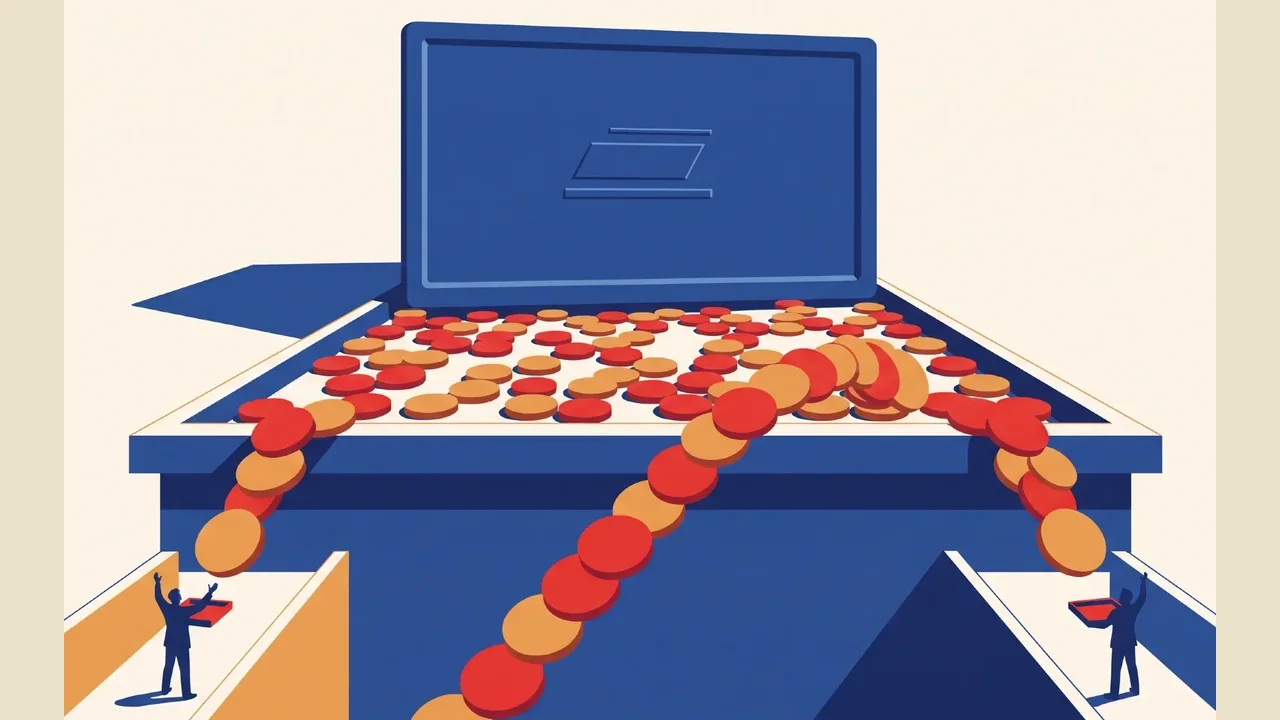
A report from Lifesight, produced with Roku, Universal Ads, Vibe.co and MNTN, states that campaigns paired with connected TV exposure show a 22.3% lift in paid search conversions and an 8.5% lift in paid social conversions. The 15-page document, titled "The State of CTV Measurement 2026: Navigating the Full-Funnel of CTV," was circulated to trade press on August 12, 2026. Neither figure carries a sample size, time period, vertical breakdown or statistical method, and the same gap runs through the report's other data points, including an EEG-based alertness statistic and a completion-rate comparison that shifts denominators between page two and page five. Four case studies back the argument, involving an anonymized advertiser, wellness brand Obvi, a California real estate firm and Image Skincare, though methodology detail is thin across all four. Every company named on the cover sells CTV inventory or measurement tooling.

Pinterest debuts on CTV via tvScientific, early LG tests show 73% reach lift
Pinterest brought its audience data to connected TV for the first time on Monday, integrating with tvScientific to let advertisers target CTV viewers using its online audience signals. Early tests on platforms including LG produced a 73% increase in unique household reach and a 24% lift in new customers, according to tvScientific CEO Jason Fairchild. Fairchild said tests combining Pinterest's high-intent signals with tvScientific's platform produced a more than 27% increase in outcomes per dollar spent and a more than 65% lift in purchases. Pinterest acquired tvScientific late last year, and Monday's rollout is the first significant joint announcement since that deal closed. Fairchild described Pinterest's signals as reflecting what people are actively planning to do, giving advertisers a chance to reach them earlier in the decision-making journey.

Walmart Connect launches negative keywords for sponsored-product ads
Walmart Connect said in late July it will let advertisers exclude specific search terms from sponsored-products campaigns through negative keywords, blocking ads from matching queries like 'dog food' or 'running shoes.' The feature is live now in the Walmart Connect Ad Center and through partners including Pacvue, Skai, Quartile, Teikametrics and DataCaciques. Amazon has offered negative keywords since 2019, according to PPC Hero, and Walmart-owned Sam's Club Connect has had the feature for at least several years, per its LinkedIn account. Chris Sheldon of Podean said brands wanting to run automatic campaigns on Walmart Connect had to bid on their own branded terms since the platform launched in late 2019, because Walmart's algorithm chooses the keywords in automatic campaigns while advertisers select keywords themselves in manual campaigns. Sheldon expects cost-per-click to rise on contested category terms and account-level return on ad spend to fall as brands stop propping up returns with branded-term traffic.
Branch survey: marketers estimate losing 27% of ad spend to fraud, ~$3M a year
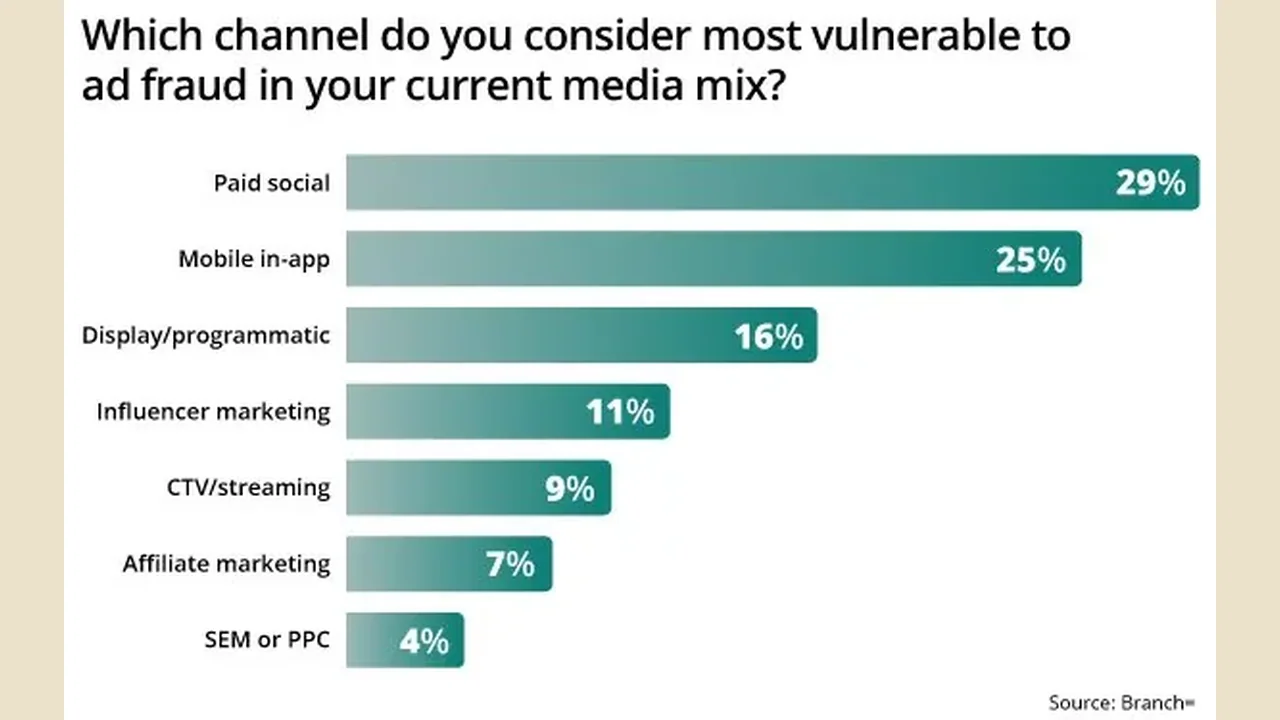
A survey of 455 marketing executives across North America, EMEA and APAC found respondents estimate losing 27% of their ad spend to fraud each year, roughly $3 million annually for the typical marketer. Branch, the fraud detection firm behind the report, published the findings Monday in "Ad Fraud In 2026: How Marketing Executives Are Responding." Eighty-seven percent of respondents said fraud concerns have risen over the past 12 months, and 98% said they have changed how they allocate or manage media budgets as a result. Paid social ranks as the top fraud concern in every region surveyed, while connected TV sits near the bottom of that list despite carrying higher invalid traffic rates than desktop or mobile web. Just 16% of marketers said AI is helping them fight fraud, while 83% said AI is making fraud harder to detect.

Mediascope: Russian radio's daily reach falls to 48% from 50.5% in 2026
Mediascope reports that Russia's average daily radio reach fell from 50.5% to 48% over the past year. Twenty-four of 34 tracked stations lost reach, seven held steady, and only three grew: Radio Monte Carlo, Kalina Krasnaya and Serebryany Dozhd, each up 0.1-0.2 percentage points. Europa Plus lost the most ground, down 1.4 points, followed by Radio Energy (NRG) at 1.3 points and Avtoradio at 1.1 points. Dorozhnoe Radio and Europa Plus remain the reach leaders at 10.2% each, with Avtoradio close behind at 10%. Two new entrants joined the ranking this year: Marusya FM debuted in the top 20 with 3.1% reach, ahead of Business FM, while Radio RBC posted 1.6%. AdIndex estimates radio ad market growth slowed more than threefold heading into 2025, even as ad budgets neared 26 billion rubles.
Retail invalid ad traffic hits record 5.54% in Q2 2026, Lunio reports
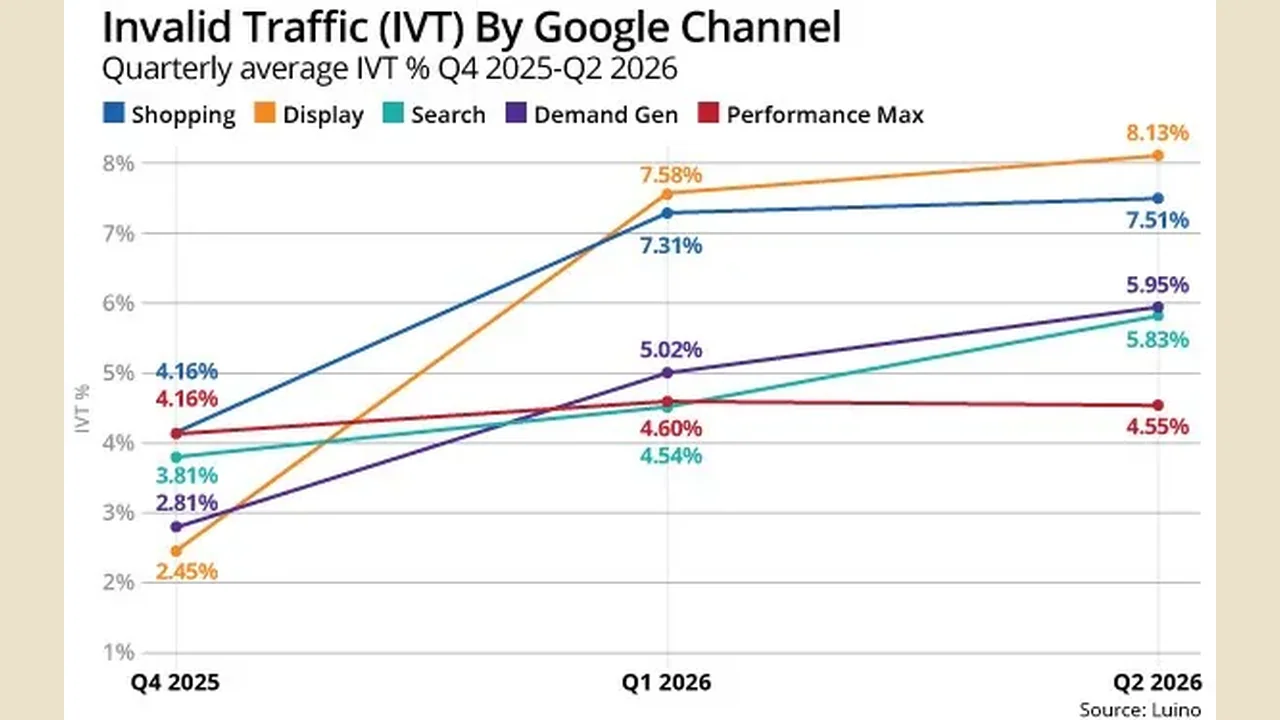
Invalid traffic in retail advertising climbed to 5.54% in the second quarter of 2026, the highest rate Lunio has recorded, up from 4.18% in the fourth quarter of 2025 and 5% in the first quarter, according to a report the ad-fraud detection firm released Wednesday. Lunio analyzed more than 414 million clicks from retail ad accounts on Google, Bing, LinkedIn, Meta and native and social platforms between October 2025 and June 2026. On Google's search campaigns, the AI Max optimization layer accounted for 68% of all invalid clicks, and Performance Max produced 47% of all Google clicks. A retailer spending $5 million a year on paid ads, at an average cost per click of $3.70, loses roughly $750,000 annually after factoring in a conservative 3:1 return on ad spend. One upper-funnel video campaign recorded an 81.33% invalid traffic rate across more than 15,000 clicks.
DoubleVerify expands measurement to TikTok Pangle across 48 markets
DoubleVerify has made independent media quality measurement available on TikTok Pangle globally, covering the US and 47 other markets. Pangle is TikTok's ad network, reachable through TikTok Ads Manager, and connects advertisers to more than 400,000 apps worldwide, according to TikTok. The rollout covers Canada, Mexico, Brazil, Colombia, Japan, South Korea, Indonesia, Thailand, Vietnam, Malaysia, Singapore, Saudi Arabia, the UAE and Australia, plus additional markets across Asia Pacific, Europe, the Middle East, Africa and Latin America. DoubleVerify Executive Vice President of Business Development Steven Woolway described the expansion as a milestone in the company's partnership with TikTok. The integration builds on DV's existing measurement and protection tools across TikTok, giving advertisers consistent quality insights when they extend campaigns into Pangle's mobile app inventory.
Case Influencio campaign for Papa Mozhet holds CPV up to 10x below plan across three waves
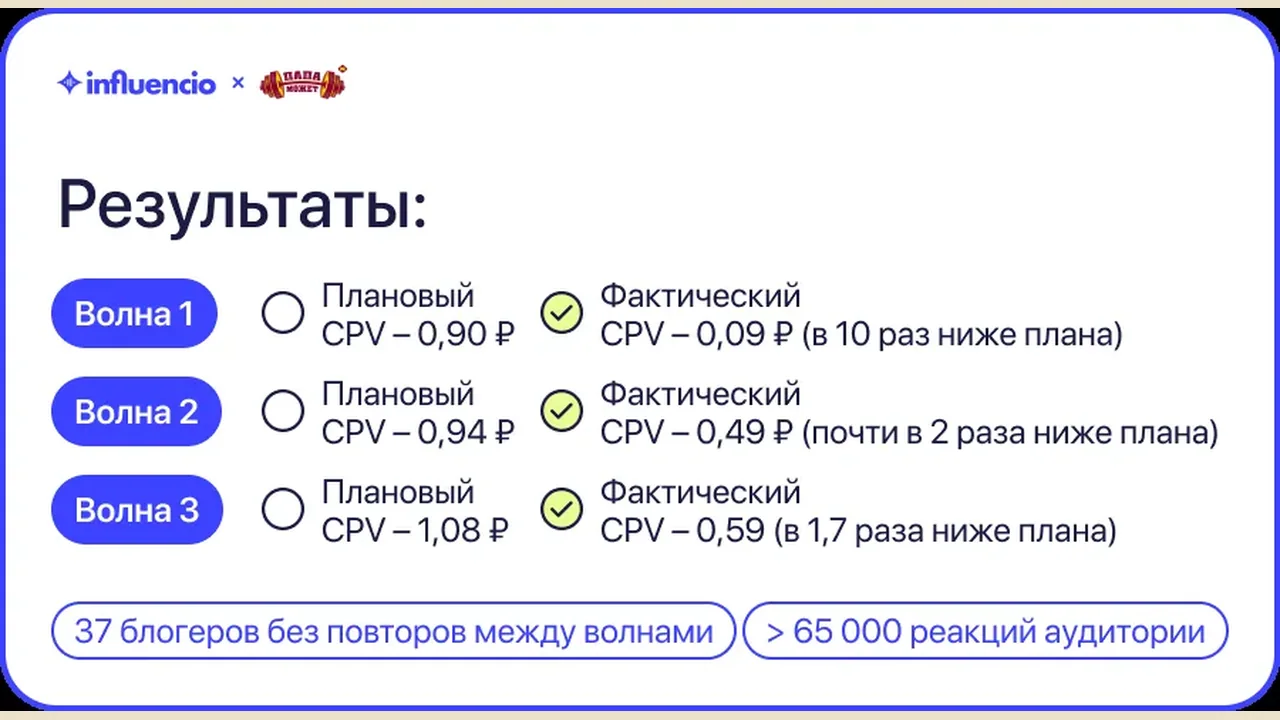
Russian influencer marketing platform Influencio ran three completed waves of an awareness campaign for meat brand Papa Mozhet, with a fourth underway, and held cost per view (CPV) several times below plan and market averages in every wave. The first wave delivered a CPV ten times lower than planned, driven by a handful of posts that outperformed guaranteed view counts. In the second and third waves, which paired the brand with the Smeshariki animated characters and required visible branded merchandise on screen, CPV came in at 0.49 and 0.59 rubles against planned targets of 0.94 and 1.08 rubles. Across all three waves Influencio worked with 37 bloggers without repeats and generated more than 65,000 audience reactions; some individual creators in the peak wave posted CPV nearly 50 times below plan. Influencio selected mostly nano and micro-influencers with engagement above 4%.
Fake Deodorant Brand Fools ChatGPT Into Recommending It in Three Weeks
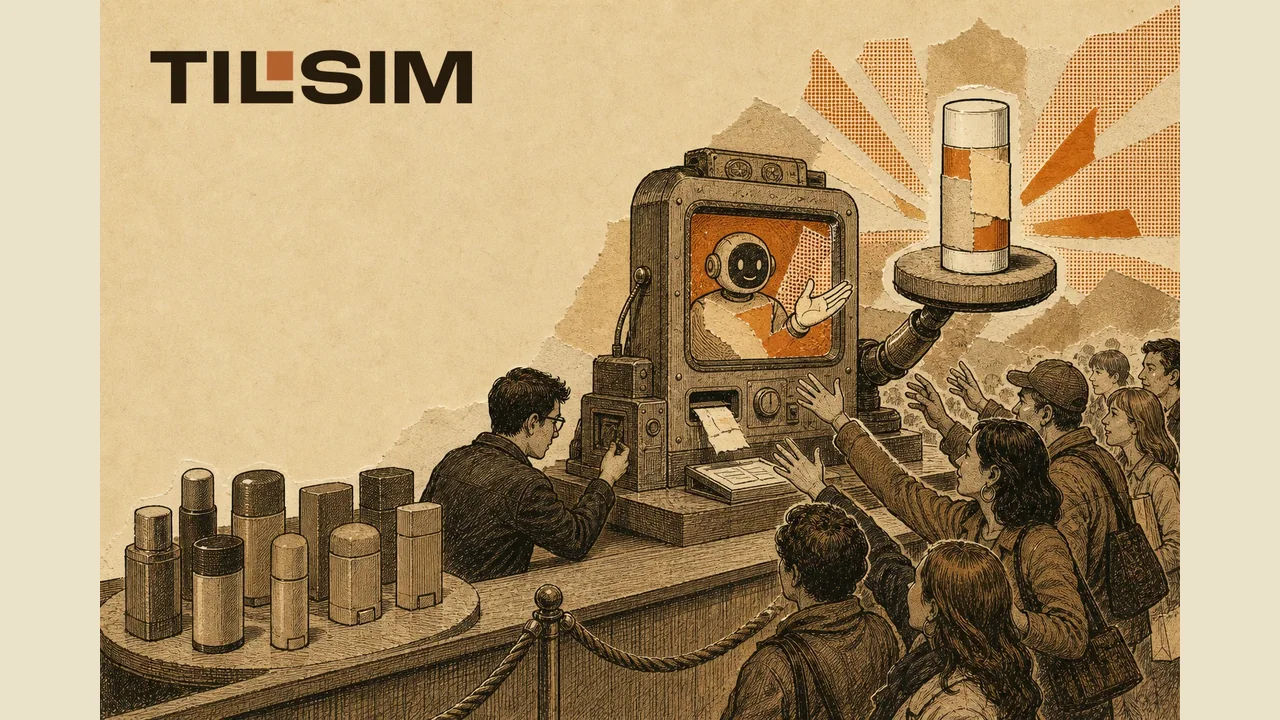
Marketer Deana Burke invented a deodorant brand purely to test AI, then watched ChatGPT and other large language models start recommending it. The site went live on a cheap domain with three pages of copy and one Substack article, and within three weeks the chatbots surfaced it as a suggestion, in some cases ahead of real brands currently in clinical trials. Burke spent only a few dollars on AI tokens to generate the copy, Inc. reports. That small spend was enough to earn placement in chatbot answers that consumers increasingly treat as product research. The experiment shows how thin the evidence bar can be for an AI system to treat a brand as credible. For companies that track share of voice in AI-generated answers, the result signals how easily that visibility can be manufactured.

InMobi opens Buyer Hub to agencies, adds conversational AI trading agent
InMobi Advertising opened its Buyer Hub deal platform to agencies and managed service demand-side platforms on Thursday, August 13, 2026, ending a fourteen-month wait since the platform's June 2025 launch. The San Mateo company also placed a conversational AI agent inside Buyer Hub, built on what it calls its unified intelligence layer, to help traders discover inventory and build deals with natural language instructions. Four new features accompany the opening: role-based access control for multi-team permissions, inventory discovery for curating supply before activation, self-serve reporting for campaign metrics, and Deals Forecasting, a side panel showing live estimates of available inventory during deal setup. Chief Business Officer Kunal Nagpal said the agent recommends moves while traders keep final control. Publicis Media's Ricky Lo and Butler/Till's Gina Whelehan both praised the platform in the announcement.