

Digest of the day
August 28, 2026
10 stories
OpenAI named WPP and Omnicom as its first ChatGPT Ads agency partners for India, with more than 50 brands lined up, while IAB's new Project Eidos brings Havas, Publicis and WPP together on AI measurement standards. Walmart's purchase of Vibe.co and Pinterest's earlier deal for TVScientific show performance advertising taking hold on CTV, and Sber's GigaChat Lite cut token prices 67.5% since October.
WPP, Omnicom become first ChatGPT Ads agency partners as India self-serve nears
OpenAI named WPP and Omnicom as its first agency partners for the India launch of ChatGPT Ads, with the partnerships covering strategy, creative, measurement, brand safety and campaign execution. More than 50 brands plan to run ads on ChatGPT in India this week, targeting logged-in adults on the Free and Go tiers; Plus, Pro, Business, Enterprise and Education subscribers stay ad-free. OpenAI said the arrangement is non-exclusive and it will keep working with other agencies. Self-serve access to ChatGPT Ads Manager opens in India on September 4, letting businesses set daily budgets starting at ₹725 through direct sign-up. The launch lands as WPP works to stabilize its business, with revenue less pass-through costs down 4.7% like-for-like in the first half of 2026 and revenue from its top 25 clients down 6.3%. Omnicom's acquisition of Interpublic Group has made it what Reuters called the world's largest advertising agency group.

ExchangeWire opinion: data governance becomes core to ad measurement as identifiers fade
Chrome dropped its plan to phase out third-party cookies and now leaves them active by default, while most of the measurement tools built under Google's Privacy Sandbox have been retired for low adoption. Third-party identifiers kept eroding anyway, through Safari and Firefox's long-standing cookie blocks, Apple's tracking prompt, falling consent rates and a growing patchwork of privacy law. Vishnu Vardhan Reddy Kaithapuram, a software engineer at Amazon Advertising, argues in an ExchangeWire column that this shift makes data governance the central task of advertiser analytics. He describes measurement systems that commit to cohorts and time windows upfront instead of joining individual event rows later, and that track where every number came from so anomalies get caught early. He proposes that buyers question vendors directly on attribution windows, cohort thresholds and whether noise is added to protect privacy, calling a vendor who answers calmly 'doing the work.'
IAB launches Project Eidos, AI measurement initiative backed by Havas, Publicis, WPP
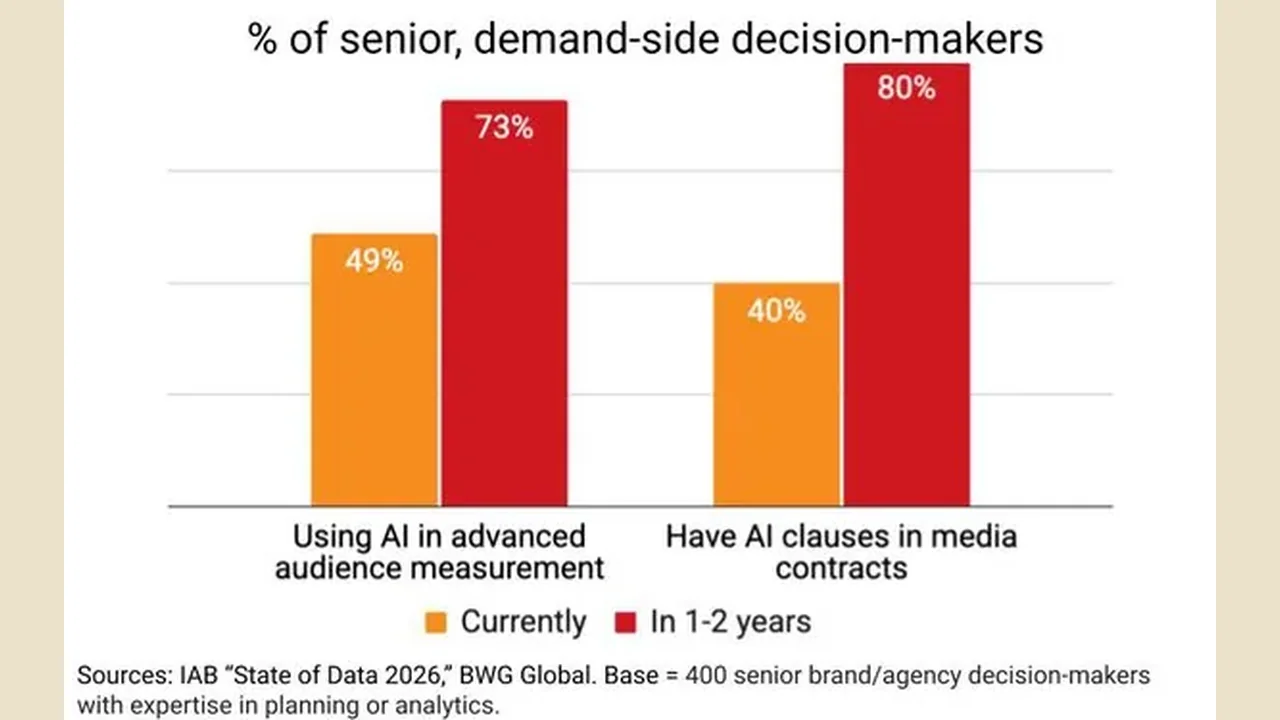
The Interactive Advertising Bureau unveiled Project Eidos on February 2, an initiative to modernize advertising and media measurement for AI-driven planning and analytics. Dozens of companies are participating, including Havas, Publicis and WPP. A companion IAB survey of more than 400 advertiser and agency decision-makers found about half already scale AI within their advanced audience-measurement systems, a share expected to reach roughly 70% within two years. About 40% of respondents hold media contracts with AI-related clauses, a figure expected to double in one to two years. None of the respondents believe every paid media channel is well represented in current marketing mix models, though the survey estimates AI could unlock $26.3 billion in media investment and $6.2 billion in productivity value within one to two years. Havas Media Network NA's Maggie Zak said no single methodology can answer every measurement question, since different approaches address different business questions.

Walmart-Vibe.co and Pinterest-TVScientific Deals Mark CTV's Push Into Performance Ads
Pinterest acquired TVScientific late last year, and Walmart bought Vibe.co last week, two deals MediaPost cites as evidence that performance advertising has taken hold on connected TV. CTV ad platforms from Vizio, LG, Samsung, Roku, Apple and Google now let performance-focused digital buyers target, measure and optimize TV spots using workflows familiar from social platforms like Meta, without learning legacy linear TV systems. Linear channels including broadcast, cable and satellite still carry more than 80% of TV ad inventory despite CTV's growth, and MediaPost's Research Intelligencer column argues digitally driven, programmatic buying will next extend to that underused linear pool. Linear spots are generally priced far below CTV inventory, a gap the piece says will speed adoption once linear becomes available on the same interchangeable buying platforms as CTV.
System1 Group launches AI tool that predicts ad outcomes from emotion
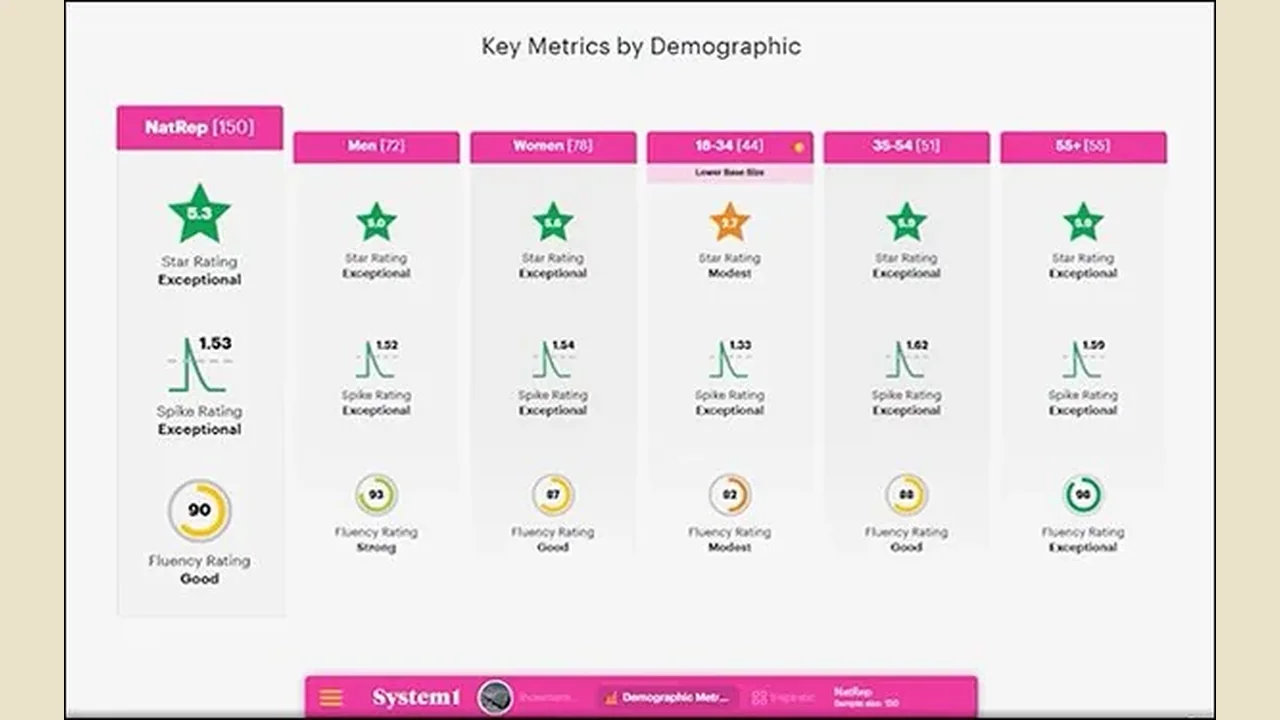
A self-service AI tool from System1 Group predicts how an advertisement will perform by scoring the emotional response it produces in viewers. The system draws on millions of possible responses and hundreds of pieces of content, and returns a prediction in minutes, according to System1. Planners can check a creative's emotional pull before a campaign goes live, using the score to flag ads likely to underperform. Traditional pre-testing panels can take days or weeks to deliver comparable results. System1's tool compresses that process into a self-service workflow that agency teams can run on demand. The launch adds to a wave of AI tools built to forecast advertising performance before spend commits, giving planners another data point for creative decisions alongside media plans.

Plan.Net's Hadi Lotfi says AI orchestration will define the next competitive advantage
Hadi Lotfi, managing director of Plan.Net Agentic AI, argues in a Drum Network column that the next divide among businesses using AI will separate organizations that orchestrate AI systems from those that simply accumulate tools and agents. Lotfi writes that the first AI race centered on access to models and platforms, while the next one will center on execution: governance, data flows and the coordination between people and intelligent systems. He says many companies still treat AI as a technology rollout, adding tools and automating workflows, when the real work is redesigning decision-making, incentives and processes built for human-only teams. Lotfi points to AI investment returns that have not yet met expectations, plus fluctuating token costs, as pressures that limit how long companies can wait for those investments to pay off. His conclusion: value shifts to human judgment, as staff evaluate outcomes and trade-offs while agents handle execution.

Kazakhstan bill would ban under-16s from registering on social media
Kazakhstan's government has submitted a bill to parliament that would bar children under 16 from registering on social networks, part of a rewrite of the country's 2018 law on protecting children from harmful information. President Kassym-Jomart Tokayev raised the measure at the Republican August Conference, saying he will ask deputies to take up the bill when the first session of the Kurultai opens. He said similar restrictions already exist in a number of countries and called for decisive steps to protect children's psychological wellbeing, warning that inaction "could negatively affect stability in society." Tokayev also ordered the government to speed up and expand mandatory children's SIM cards, which he said would give children what he called "information immunity." He separately asked the government to address aggressive fast-food advertising, citing about 7,000 children currently under medical observation for diabetes. The bill was submitted to parliament in June.

Case Pupa Milano and Realweb reached up to 90% of online audience with VTR up to 95%
Italian cosmetics brand Pupa Milano and digital agency Realweb built a media split covering nearly every known format, from OLV and Smart TV to online cinema ads, static and interactive banners and DOOH, to launch five new products in the Russian market in 2025. The campaign reached up to 90% of the online audience and hit view-through rates as high as 95%, with contact frequency reaching 6. NRA, the main seller of Russian TV airtime, raised its base rates by 40 to 58% in 2025, and more than 70% of TV inventory sold in early deals to the top 20 advertisers, prompting the team to build a full digital funnel to match TV-level reach and frequency. Smart TV placements on Wink VOD and Yandex Direct delivered VTR of 94% and 87%. Influencer video outperformed studio-produced brand clips across every platform tested. Brand search queries rose 104.37% among people exposed to the campaign, against 11.65% in the control group.
The Drum: billboards now trigger AI search, per a Leeds price-comparison test
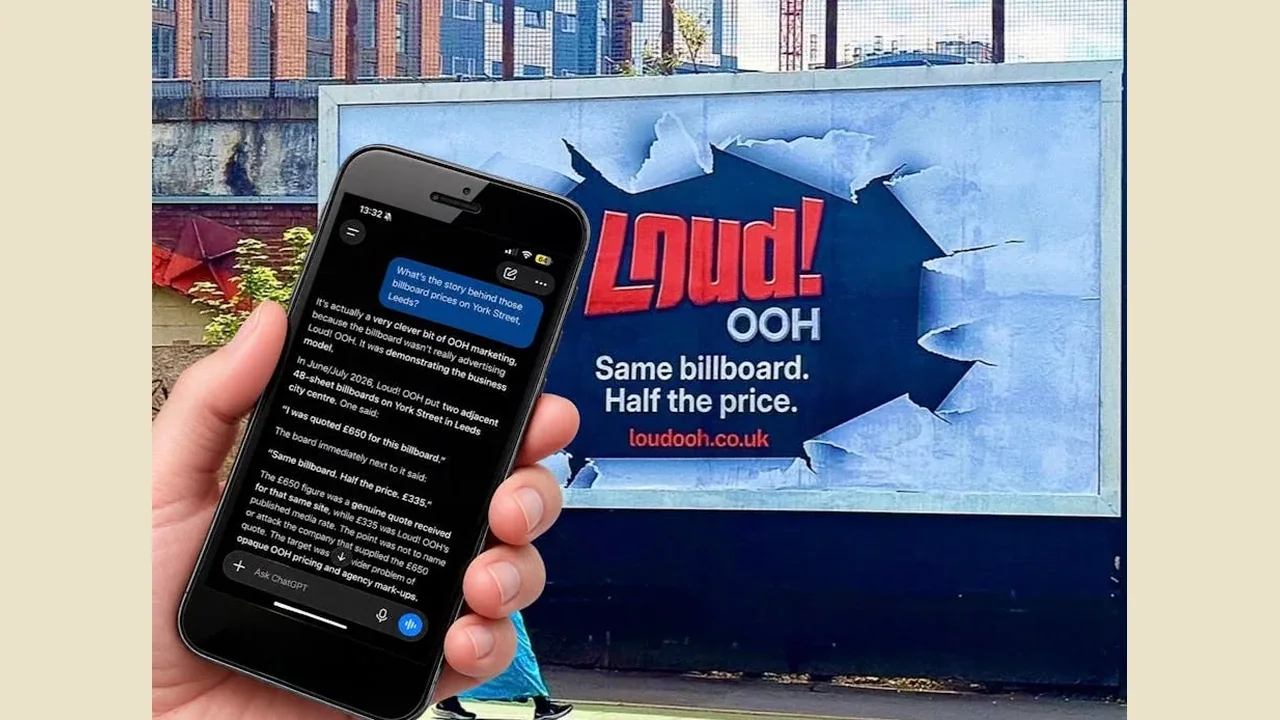
A campaign on York Street in Leeds used two adjacent 48-sheet billboards to contrast an existing quoted price for the same site, prompting people to photograph the boards and publications to cover the story. The example anchors a Drum Network op-ed arguing that out-of-home creative increasingly triggers questions inside AI answer engines such as ChatGPT, Gemini and Perplexity, alongside traditional branded search. The author, an agency CEO writing under The Drum Network programme, frames the consumer path as billboard, question, AI answer, brand investigation, website visit, action. The piece argues that answer engine optimisation depends on a company's wider digital footprint, its website content, reviews and press coverage, and how consistently that information appears across the web. Planners are urged to consider the likely question a campaign will generate alongside location, reach and frequency when building OOH strategy.

Sber and Yandex cut AI token prices up to 67.5% since October 2025
GigaChat Lite's price per 1,000 tokens fell 67.5% between October 2025 and August 2026, from 0.20 to 0.07 rubles, according to a study by the Nodul platform cited by RBK. GigaChat Pro dropped 66.7%, from 1.50 to 0.50 rubles, and YandexGPT Pro 5.1 fell 33% over the same period. Sber and Yandex both introduced lower token tariffs during this window. Even after these cuts, comparable foreign models remain far cheaper: DeepSeek V4 Flash's junior version costs about 0.04 rubles per 1,000 input tokens and 0.11 rubles per 1,000 output tokens, while Qwen 3.8 Max charges 0.17 and 0.51 rubles respectively. RBK reports foreign models of comparable class can cost up to 10 times less than the Russian options.