

BrightEdge: Google AI Overviews leans local, ChatGPT leans on deals and pricing
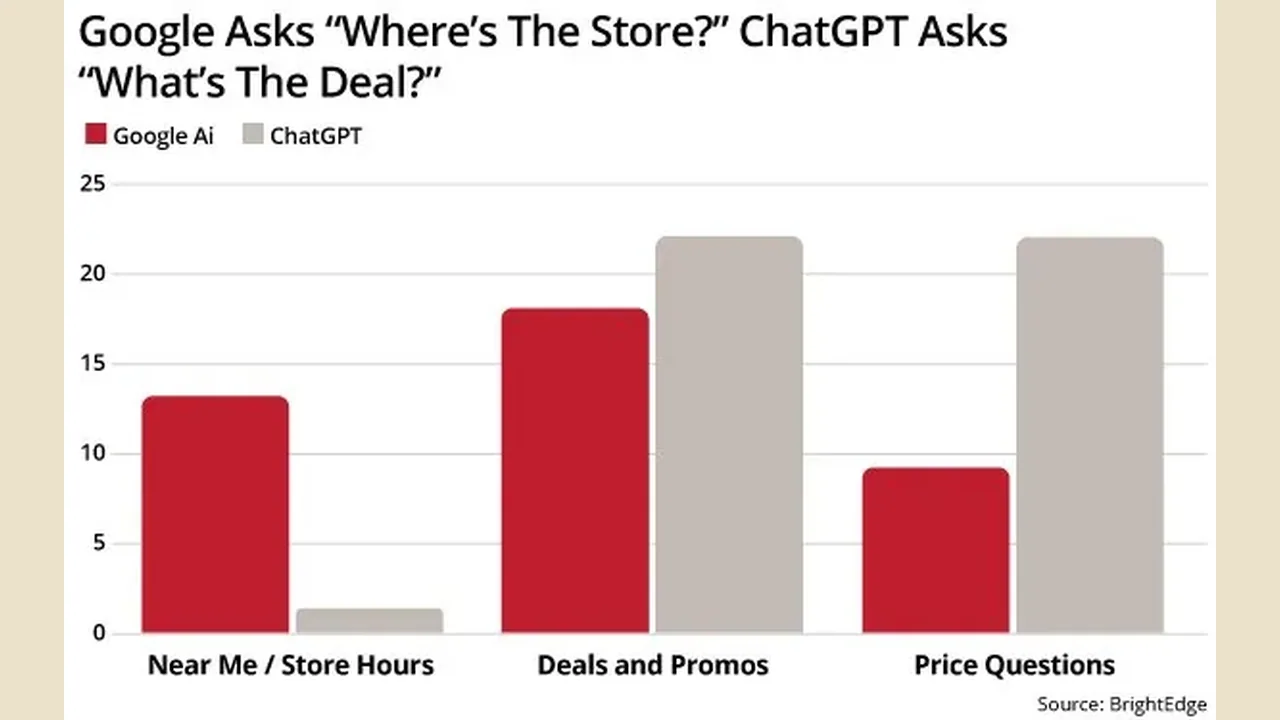
"Google asks 'Where's the store?' and ChatGPT asks 'What's the deal?'" BrightEdge, an enterprise content performance marketing platform, published data this week comparing how the two AI engines cite brands. Between 11% and 14% of Google AI Overviews' transactional citations are near-me or store-hours prompts, while ChatGPT ignores those local signals in nearly every query, with only 1% of its citations touching local information. Deals account for about 20% of ChatGPT's transactional citations and pricing for another 24%. On the retail side, when Google AI Overviews cites Facebook or Instagram in a lower-funnel answer, a major retailer is named or recommended about 85% of the time, and product brands account for only 3% to 4% of those mentions.
Brand pages that keep hours, stock and local promotions current earn more citations inside Google AI Overviews, while product listings built for ChatGPT need visible pricing and deal terms to surface at all. Retailers capture the large majority of Facebook and Instagram citations at the bottom of the funnel, so product brands relying on social content to drive purchase decisions are competing for a narrow 3% to 4% share of mentions. Instagram content should lead with price, availability and where to buy. Facebook pages should stay current on troubleshooting and returns, since BrightEdge found the platform cited for post-purchase help more than twice as often as Instagram.
- Agentic ad buyers join 86% fewer auctions, DataBeat finds
- AdRoll, Dentsu, Omnicom test ChatGPT ad buying as Gartner sees 70% shift by 2028
- Canvas fingerprinting found on 12.7% of top sites, led by Akamai's bot-detection script
- Yandex: nearly 1 in 6 Alisa AI purchase searches target appliances, electronics