

Digest of the day
August 17, 2026
10 stories
DataBeat found agentic ad buyers joined 86% fewer auctions in May while clearing prices 13.4% lower than conventional demand, as AdRoll, Dentsu and Omnicom Media pilot ChatGPT ad buying ahead of Gartner's forecast that 70% of programmatic spend shifts to AI agents by 2028. Separately, researchers clocked canvas fingerprinting on 12.7% of top sites, much of it from Akamai's bot-detection script.

Agentic ad buyers join 86% fewer auctions, DataBeat finds
DataBeat, a programmatic analytics provider, found that buyers using AI agents took part in 86% fewer auctions in May 2026 than conventional demand, while clearing prices 13.4% lower. Conventional buyers paid $6.95 per thousand impressions on average against $6.13 for agentic buyers, though agentic buying led on fill rate, 0.204% versus 0.183%. IAB Tech Lab's AAMP 2.0, released in April 2026, added agentic Programmatic Guaranteed deals that bypass the open auction and settle on price and volume fixed in advance. Jeff Green, chief executive of The Trade Desk, told the company's August 6, 2026 earnings call that competitors have built guaranteed, fixed-price and simple deal products, some of them wrapped in agentic technology. Rival platforms are pricing that guaranteed-plus-agentic combination at fees near 1%, against roughly 20% captured by the incumbent platform.

AdRoll, Dentsu, Omnicom test ChatGPT ad buying as Gartner sees 70% shift by 2028
AdRoll has begun piloting advertising placements inside ChatGPT, while Dentsu is pairing ChatGPT campaigns with competitive intelligence from Adthena. Omnicom Media has tested autonomous AI agents capable of identifying inventory, negotiating terms and completing ad purchases without human execution. Gartner forecasts that more than 70% of global advertising spend will flow through AI-influenced self-service platforms by 2028, with AI systems increasingly determining which ads appear, who sees them and what advertisers pay. ChatGPT is becoming an environment where consumers research and compare products, giving brands a chance to shape decisions before conventional purchase intent forms. Agencies are shifting toward directing intelligent systems, with competitive advantage moving toward strategy, data and oversight. Independent measurement and transparency gain importance as machines take on more control over targeting, pricing and placement.
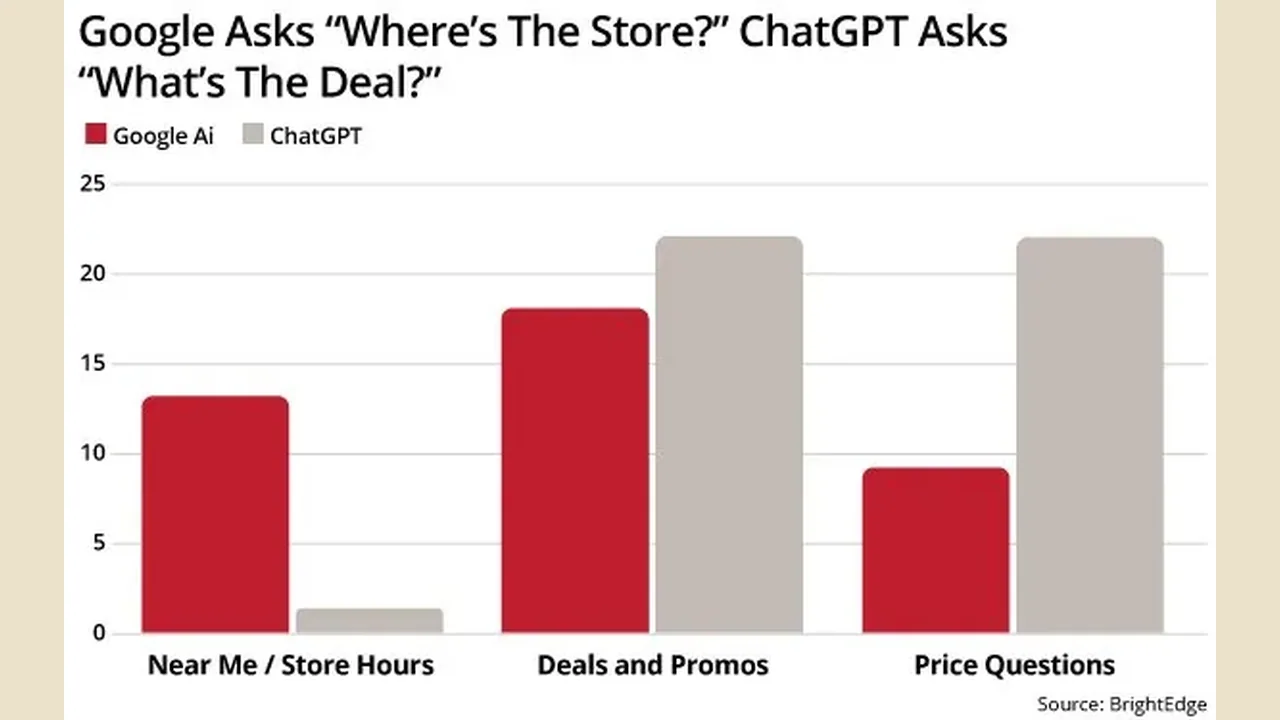
BrightEdge: Google AI Overviews leans local, ChatGPT leans on deals and pricing
BrightEdge, an enterprise content performance marketing platform, released data this week showing that Google AI Overviews and ChatGPT pull different signals when they cite brands. Between 11% and 14% of Google AI Overviews' transactional citations come from near-me and store-hours prompts. ChatGPT ignores local signals in nearly every query and only 1% of its citations touch local information. Deals make up about 20% of ChatGPT's transactional citations and pricing makes up another 24%. When Google AI Overviews cites Facebook or Instagram in a lower-funnel answer, a major retailer gets named or recommended about 85% of the time, while product brands appear in just 3% to 4% of those mentions. BrightEdge found Instagram serves buying-moment queries about price and availability. Facebook handles post-purchase questions such as troubleshooting and returns at more than double Instagram's rate.

Canvas fingerprinting found on 12.7% of top sites, led by Akamai's bot-detection script
Researchers Elisa Luo, Tom Ritter, Stefan Savage and Geoffrey Voelker presented findings at the ACM Internet Measurement Conference in October 2025 showing canvas fingerprinting running on 12.7 percent of the Tranco top 20,000 websites, compared with 5.1 percent among the top 1,000 sites recorded in a 2016 study. The average site carried 3.31 fingerprintable canvases, with a median of two and a maximum of 60. Akamai's bot-detection script had the widest reach, appearing on 485 sites, 23 percent of all sites doing canvas fingerprinting. FingerprintJS followed on 462 sites; only 23 of those ran the paid commercial product, with the remainder using the open-source library. Among lower-ranked sites, Shopify's storefront performance script was most common, found on 457. Around 45 percent of the canvases the researchers tested belonged to scripts already listed on EasyList, EasyPrivacy or Disconnect.

Yandex: nearly 1 in 6 Alisa AI purchase searches target appliances, electronics
Yandex reports that household appliances and electronics have become one of the most sought categories among purchases made through its Alisa AI assistant. Since the start of 2026, nearly one in six shopping queries submitted to Alisa AI has involved appliances or electronics, the company told AdIndex. Users researching these products mostly check specifications and reviews, and compare models, prices and purchase terms. Yandex's "Найти дешевле" (Find Cheaper) agent finds electronics priced 21% lower on average than initial listings, with some cases showing a 40% gap. In July, refrigerators and televisions were the most searched appliances through the Find Cheaper agent, while smartphones led searches among electronics. Yandex also recently added a feature letting Alisa AI in Yandex Browser analyze video and documents open in the browser to answer questions about their content.
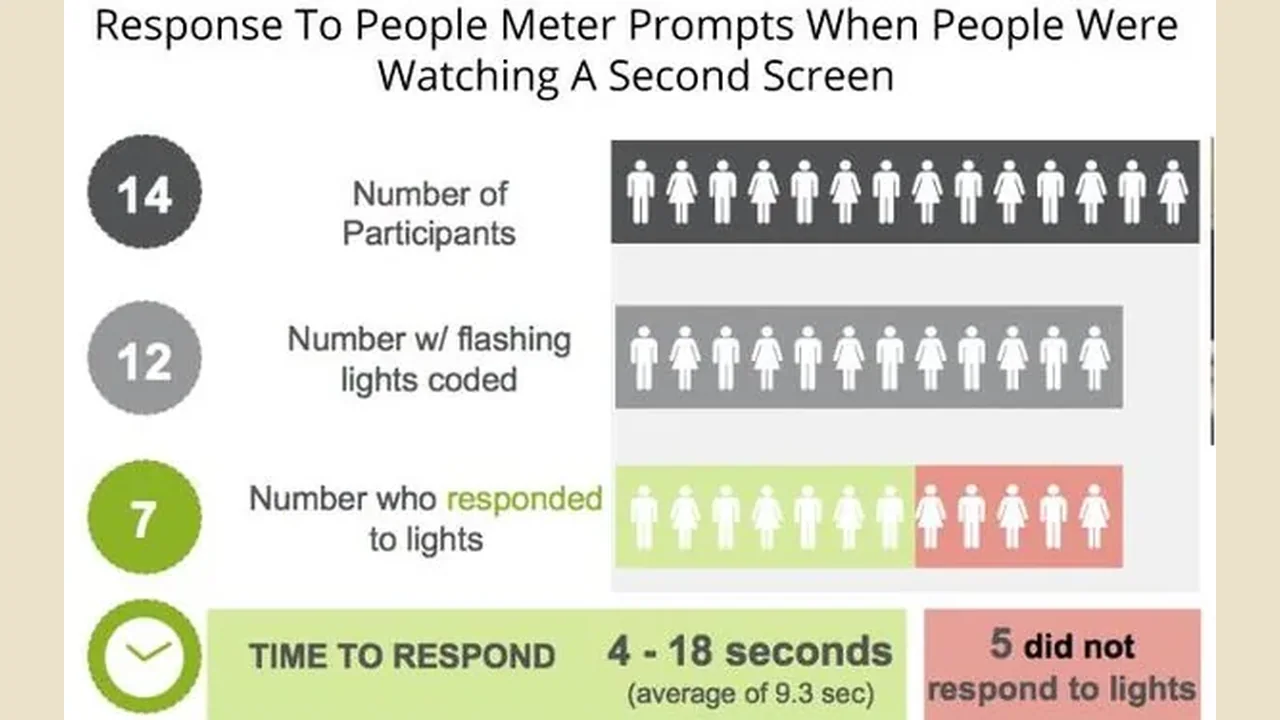
Nielsen neuro study finds second screens cause 25% of panelists to miss meter prompts
Nielsen Consumer Neuro found that three of 12 people-meter panelists in a lab study, or 25%, missed a meter prompt because they were looking at a second screen. The research, called 'The Mind of the Viewer,' was commissioned by the Council for Research Excellence and presented by Nielsen's chief neuroscientist Carl Marci in New York. Seven of the 12 participants responded correctly to the prompt and five did not, with three of those five fixated on a second screen at the time. Marci called the findings preliminary and based on a small sample. The same study found attention to advertising rose from 15% in solo viewing to 20% in co-viewing, then declined when a second screen was present. The CRE plans further research in more natural and in-home settings to examine how second-screen use affects the panel data behind national TV ratings.

Programmatic buyers rate supply-chain trust 6 to 7 of 10 at POSSIBLE panel
Media buying and supply-side executives at a POSSIBLE panel in Miami Beach rated trust in the programmatic supply chain at six or seven out of ten, moderator Stacy Bohrer of OpenX found, up from a few years ago as buyers, publishers, DSPs and SSPs share more signals directly. Razorfish president and head of media Mac Hagel said 'the SSP has really moved from plumbing to performance,' pointing to private marketplaces and cleaner supply paths. PepsiCo global data partnerships lead Zach Lain said brands no longer just ask whether a channel can reach an audience, they ask partners to prove what they show and disclose where their data is weakest. A+E Global Media VP of programmatic Joseph Lerner said publisher data spanning linear TV, CTV, FAST and digital is not always fully passed through programmatic pipes, and that buyers are willing to pay once they understand what they are buying.

Snap launches multi-CTA ad format for compliant pharma campaigns
Snap has launched a multi-CTA ad format that lets pharma brands attach up to three disclaimer links alongside a primary call-to-action. The format targets U.S. Rx marketers who must give users one-click access to safety information under social platform compliance rules. Snap says 95% of its 971 million global users show an active interest in health and wellness topics. The new attachments work across Snap Ads, Story Ads and Commercials immediately, with Sponsored Snaps support arriving by the end of 2026. Small text links sit below the primary ad, so users can tap through disclaimers, safety guides or extra product details without leaving the Snapchat feed. The design lets brands route different audiences, patients, caregivers, healthcare professionals, to the specific resource each group needs.

Mediascope 2025: Russians average 4 hours a day outside home, out of digital reach
Radio reaches about 60 million people a week in Russia, per Mediascope's 2025 measurement, and carries some of the lowest CPMs among traditional media. Sostav.ru published a guide by marketing lead Pavel making the case that offline channels return measurable results when every touchpoint gets a tracked identifier. The same Mediascope data show the average Russian spends about four hours a day outside the home, time digital advertising cannot reach. Two case studies back the claim: a dry-cleaning chain's weather-targeted digital-out-of-home campaign lifted promo-code conversions 60% against constant placement while spending less on impressions, and a security-systems company turned a 380,000-ruble trade-show stand into 4.2 million rubles across nine deals, a return above 1000%. Nielsen data cited in the piece show branded shelf displays lift sales 20-35% without extra ad spend. The guide ties every channel, from radio to leaflets, to call tracking, UTM-tagged QR codes and CRM logging so results can be attributed to source.

CloudBuying: 85% of Russian bank mentions on Telegram appear outside banks' own posts
A CloudBuying study found that 85% of mentions of Russian bank brands on Telegram appear in content the banks do not control. Sberbank posted 811,795 pieces of advertising carrying ERID marks over the past year, and VTB posted 631,466, according to Brand Analytics data. Sberbank's own placements account for only 2.5% of all mentions of its brand, and VTB's for 4.6%. The remainder comes from partner posts, developers, car dealerships and credit brokers among them, that name the bank because Russia's advertising law No. 38 requires disclosure. Alfa-Bank is the exception: it holds 111 million of its own placements against 132 million from partners. Brand Analytics puts Telegram's share of Russia's ad market at 43%, with financial services accounting for 12-14% of total ad volume on the platform. Russia has no brand safety standard, and industry recommendations for the sector remain unimplemented.